
How to Calm Down: 11 Tips to Calm Anxiety
Feeling stressed out? Need some strategies to calm down? Discover science-based tips to help you calm down an anxious mind and body.

*This page may include affiliate links; that means I earn from qualifying purchases of products.
Before we get started, we thought you might also be interested in taking our well-being quiz. Or, if you’re a well-being entrepreneur or coach, download our Wellness Business Growth eBook to get expert tips, tools, and resources to share with your audience.
Are You a Therapist, Coach, or Wellness Entrepreneur?
Grab Our Free eBook to Learn How to
Grow Your Wellness Business Exponentially!
✓ Save hundreds of hours of time ✓ Earn more $ faster
✓ Boost your credibility ✓ Deliver high-impact content
What Does It Mean to Calm Down?
So calming down usually means we want our body to return to homeostasis (or its normal resting state). Generally, it involves feelings of relief, a reduction in negative emotions, and a general sense that we’re okay. Given how unpleasant we might be feeling at times, learning strategies to calm down can be a great boon to our well-being. We’ll talk more about these ‘calming-down’ strategies below.
How to Calm Down
1. Calm Down With Mindfulness
Check out the guided meditation below to give it a try.
Video: Daily Calm | 10 Minute Mindfulness Meditation
2. Calm Down With a Digital Detox
|
When we’re constantly using our technologies—smartphones, computers, tablets, etc…—our brains are continually active. We’re busy learning and absorbing information, much of which can be anxiety-provoking. So, if we’re feeling like we need to calm down, taking a short break from technology can help.
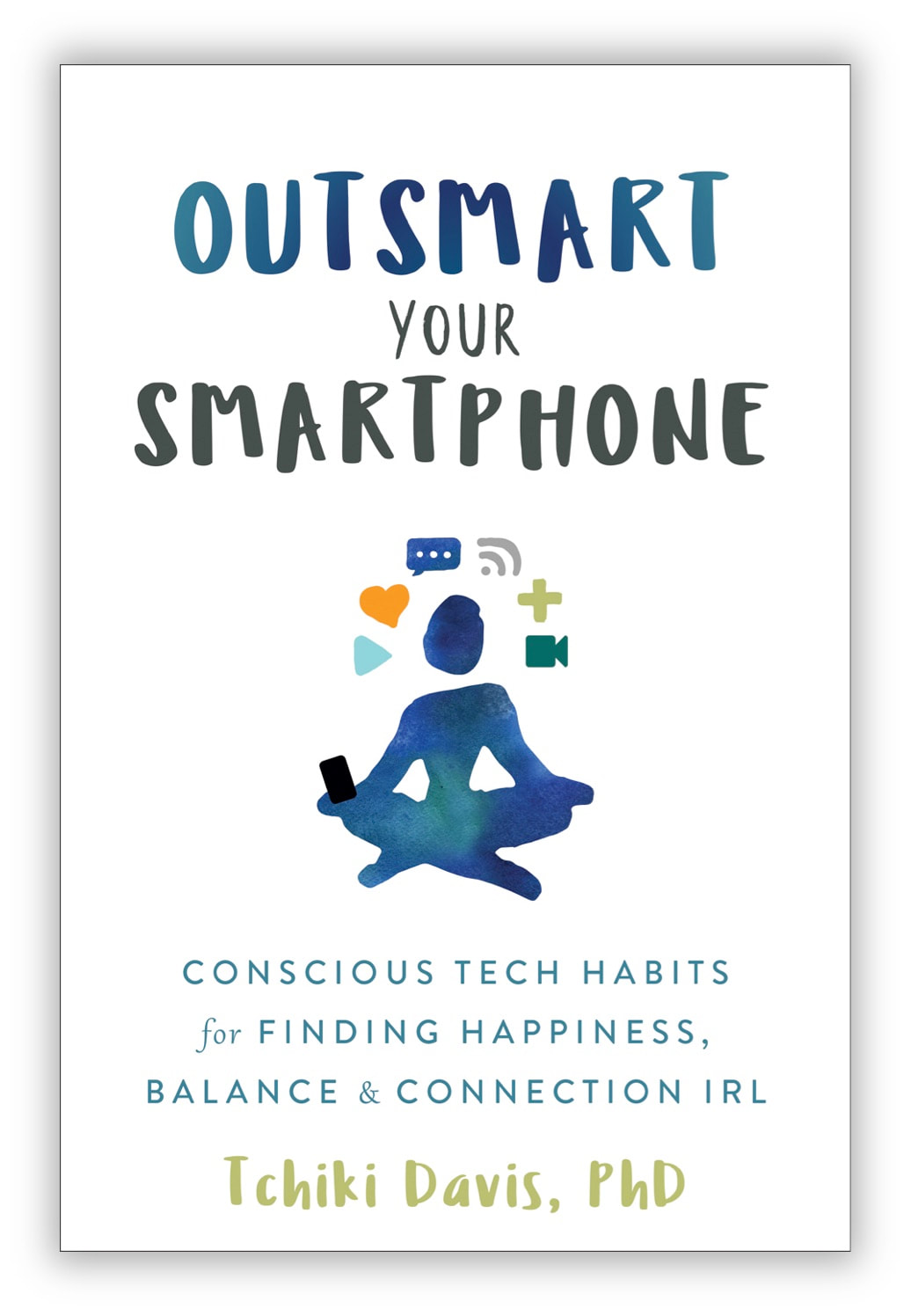
If you want some science-based tips for building a healthier relationship with your technology, check out my book, Outsmart Your Smartphone. |
|
3. Calm Down by Listening to Binaural Beats
Music: Binaural Beats for Inner Peace
4. Calm Down by Getting Rumination Under Control
Unfortunately, it’s not always easy to stop rumination. You may have heard the saying, “Neurons that fire together, wire together.” Basically, this means that when we think in certain ways, it becomes easier for our brains to keep thinking in those same ways. So when we decide we want to break out of negative thought patterns, it can be tough.
In my experience, some of the best ways to stop these repetitive thoughts involves forcing the brain to focus on something else. I don’t just mean will the brain to stop—that rarely works. I mean give it something so distracting that it can’t help but change focus. For example, taking a cold shower or doing a few sprints work well for me. And the science suggests that both of these strategies do indeed help calm us down (e.g., Mourot et al., 2008).
5. Calm Down by Writing in a Journal
Other types of journaling may help induce feelings of calm or well-being as well. For example, gratitude journaling is a popular type of journaling that has been shown to be beneficial (Kaczmarek et al., 2015). By shifting our focus to the good things in our lives—the things we’re thankful for—we can potentially decrease negative emotions and feel a bit calmer.
6. Calm Down With Positive Visualization
I use this strategy almost every day—sometimes to go to sleep, sometimes to decompress between work and lunchtime, and sometimes just to calm my nerves when I’m feeling tense. If you want to try a guided version of this exercise, check out this happiness visualization exercise.

7. Calm Down With Outdoor Activities
Outside tends to have cleaner air than indoors, there’s often some sunlight, which provides us with vitamin D, and even the scent of trees can be good for our mental health and well-being. So if you have even a few extra minutes, consider spending them in a park reading, walking around the block, or even adventuring in the woods or at the beach. Any or all of these things may help calm you.
8. Calm Down With Yoga
9. Calm Down With Some Deep Breaths
By engaging in some deep, slow, long breaths, we help activate our parasympathetic system and turn down our sympathetic system. Perhaps this is why deep breathing is well known for inducing a sense of calm (Zope & Zope, 2013). Check out the video below for a short breathing exercise.
Video: Box Breathing Relaxation Technique: How to Calm Feelings of Stress or Anxiety
How to Calm Down From a Panic Attack
The antidote seems to be to adopt acceptance and passivity (versus control) over the body and mind (Wilson, Barnes-Holmes, & Barnes-Holmes, 2014). In other words, we need to engage in calming or relaxing strategies without focusing obsessively on how well it will work for us or suppressing negative thoughts and feelings. For example, instead of doing deep breathing while we continually ask ourselves, “Do I feel calm yet?” we have to be present, let the emotions come out as they want to, and then fade in their own time.
We calm down when we accept rather than reject our feelings
According to psychologists, relaxation is an act of passive habituation not effortful control (Wilson, Barnes-Holmes, & Barnes-Holmes, 2014). So the simple act of letting the panic attack happen and not trying to control it is, paradoxically, one of the best ways to stop it.
Example of calming down from a panic attack
I know this seems strange, but I’ve seen this work in my own life. I was stuck in a panic attack once for about 15 minutes unable to stop gasping for air and unable to calm myself down. All my therapist had to tell me was to just sit down and let the panic attack happen. Within a few minutes, I was completely better. It was like magic. I hadn’t realized it, but I had been trying to shove all the feelings down to stop them and they just kept boiling over. Then I stopped trying to control it and just accepted what was happening to me. Poof! Panic attack gone.
Video: 3 Tips to Calm a Panic Attack
How to Calm Down from Stress
Dr. Daniel Levitin suggests it can be helpful to do some logical thinking ahead of time so that when we’re stressed we’ll already have made key decisions about what to do. In the video below, he shares some examples. When it comes to calming down, here are a few more examples of things to do ahead of time.
- You could bookmark a breathing or meditation video on your phone.
- Keep a notecard in your wallet with a list of things to try if you have a panic attack.
- Schedule weekly yoga sessions to keep yourself in a more calm state.
Video: How to Stay Calm When You Know You’ll Be Stressed
More Articles to Help Calm You Down
- Coloring for Calmness: How to Manage Anxiety with Coloring
- 13 Ways Plants Can Boost Your Health and Happiness
- Tea for Calmness: 10 Teas to Calm Stress and Anxiety
- Positive Emotions: List, 90+ Examples, Theories, & Tips
- Inner Peace: Definition, Examples, & How To Find It
- Calmness: Definition, Quotes, Meditations, & More
- The Wim Hof Method: Definition, Benefits, & Explanation
- Calming Apps: For Anxiety, Sleep, & More
- Feeling Anxious: When Waking Up, at Night, and More
- Nervousness: Definition, Symptoms, & Relief
Supplements to Help Calm You Down
Books to Teach You How to Calm Down

Final Thoughts on How to Calm Down
Stress is a part of life. But learning how to manage it and calm ourselves down can make stress a lot less problematic. So, in this article, we explored a bunch of different ways to calm down, reduce anxiety, and de-stress.
Don’t Forget to Grab Our Free eBook to Learn How to
Grow Your Wellness Business Exponentially!
References
- Charmandari, E., Tsigos, C., & Chrousos, G. (2005). Endocrinology of the stress response. Annu. Rev. Physiol., 67, 259-284.
- Garcia-Argibay, M., Santed, M. A., & Reales, J. M. (2019). Efficacy of binaural auditory beats in cognition, anxiety, and pain perception: a meta-analysis. Psychological Research, 83(2), 357-372.
- Kaczmarek, L. D., Kashdan, T. B., Drążkowski, D., Enko, J., Kosakowski, M., Szäefer, A., & Bujacz, A. (2015). Why do people prefer gratitude journaling over gratitude letters? The influence of individual differences in motivation and personality on web-based interventions. Personality and Individual Differences, 75, 1-6.
- Khalfa, S., BELLA, S. D., Roy, M., Peretz, I., & Lupien, S. J. (2003). Effects of relaxing music on salivary cortisol level after psychological stress. Annals of the New York Academy of Sciences, 999(1), 374-376.
- Khoury, B., Lecomte, T., Fortin, G., Masse, M., Therien, P., Bouchard, V., … & Hofmann, S. G. (2013). Mindfulness-based therapy: a comprehensive meta-analysis. Clinical psychology review, 33(6), 763-771.
- Krick, A., & Felfe, J. (2019). Who benefits from mindfulness? The moderating role of personality and social norms for the effectiveness on psychological and physiological outcomes among police officers. Journal of occupational health psychology.
- Mourot, L., Bouhaddi, M., Gandelin, E., Cappelle, S., Dumoulin, G., Wolf, J. P., … & Regnard, J. (2008). Cardiovascular autonomic control during short-term thermoneutral and cool head-out immersion. Aviation, space, and environmental medicine, 79(1), 14-20.
- Pennebaker, J. W. (1997). Writing about emotional experiences as a therapeutic process. Psychological science, 8(3), 162-166.
- Quoidbach, J., Wood, A. M., & Hansenne, M. (2009). Back to the future: The effect of daily practice of mental time travel into the future on happiness and anxiety. The Journal of Positive Psychology, 4(5), 349-355.
- Thirthalli, J., Naveen, G. H., Rao, M. G., Varambally, S., Christopher, R., & Gangadhar, B. N. (2013). Cortisol and antidepressant effects of yoga. Indian journal of psychiatry, 55(Suppl 3), S405.
- Ulrich, R. S., & Parsons, R. (1992). Influences of passive experiences with plants on individual well-being and health. The role of horticulture in human well-being and social development, 93-105.
- Wilson, C. J., Barnes-Holmes, Y., & Barnes-Holmes, D. (2014). How exactly do I “let go”? The potential of using ACT to overcome the relaxation paradox. SAGE Open, 4(1), 2158244014526722.
- Zope, S. A., & Zope, R. A. (2013). Sudarshan kriya yoga: Breathing for health. International journal of yoga, 6(1), 4.
Are You a Therapist, Coach, or Wellness Entrepreneur?
Grab Our Free eBook to Learn How to Grow Your Wellness Business Fast!
