
Peace of Mind: Definition & 14 Tips to Calm the Mind
Feeling frazzled? Want to calm your mind off and just relax already? Discover science-based tips and strategies to help you create a more peaceful mind.

*This page may include affiliate links; that means I earn from qualifying purchases of products.
What Is Peace of Mind? (A Definition)
Tips for Finding Peace of Mind
A lot of research has pointed to ways we can decrease stress and calm down an overactive stress response fueled by sympathetic nervous system activation, the release of cortisol, and the release of the catecholamines norepinephrine and epinephrine (Charmandari, Tsigos, & Chrousos, 2005). So what are some of these science-supported ways to create more peace of mind?
Are You a Therapist, Coach, or Wellness Entrepreneur?
Grab Our Free eBook to Learn How to
Grow Your Wellness Business Exponentially!
✓ Save hundreds of hours of time ✓ Earn more $ faster
✓ Boost your credibility ✓ Deliver high-impact content
1. Find Peace of Mind With Visualization
The cool thing about visualization is that when we imagine things, our brains react in very similar ways as they would if those things were happening in our real lives. So when we visualize something calming, some parts of our brains think it’s real. As a result, we can start to feel more calm, or happy, or peaceful, or whatever emotions the visualization evokes (Quoidbach, Wood, & Hansenne, 2009). So if you want to have peace of mind, try to imagine a scenario that cultivates peace of mind.
2. Find Peace of Mind With Mindfulness
Guided Meditation: Cultivate Peace of Mind
3. Find Peace of Mind by Taking a Break From Your Phone
|
Our phones hold all sorts of interesting information—messages from our friends, news, games, apps, and more. It’s all quite stimulating, which is exactly what we don’t want when we’re trying to cultivate peace of mind.
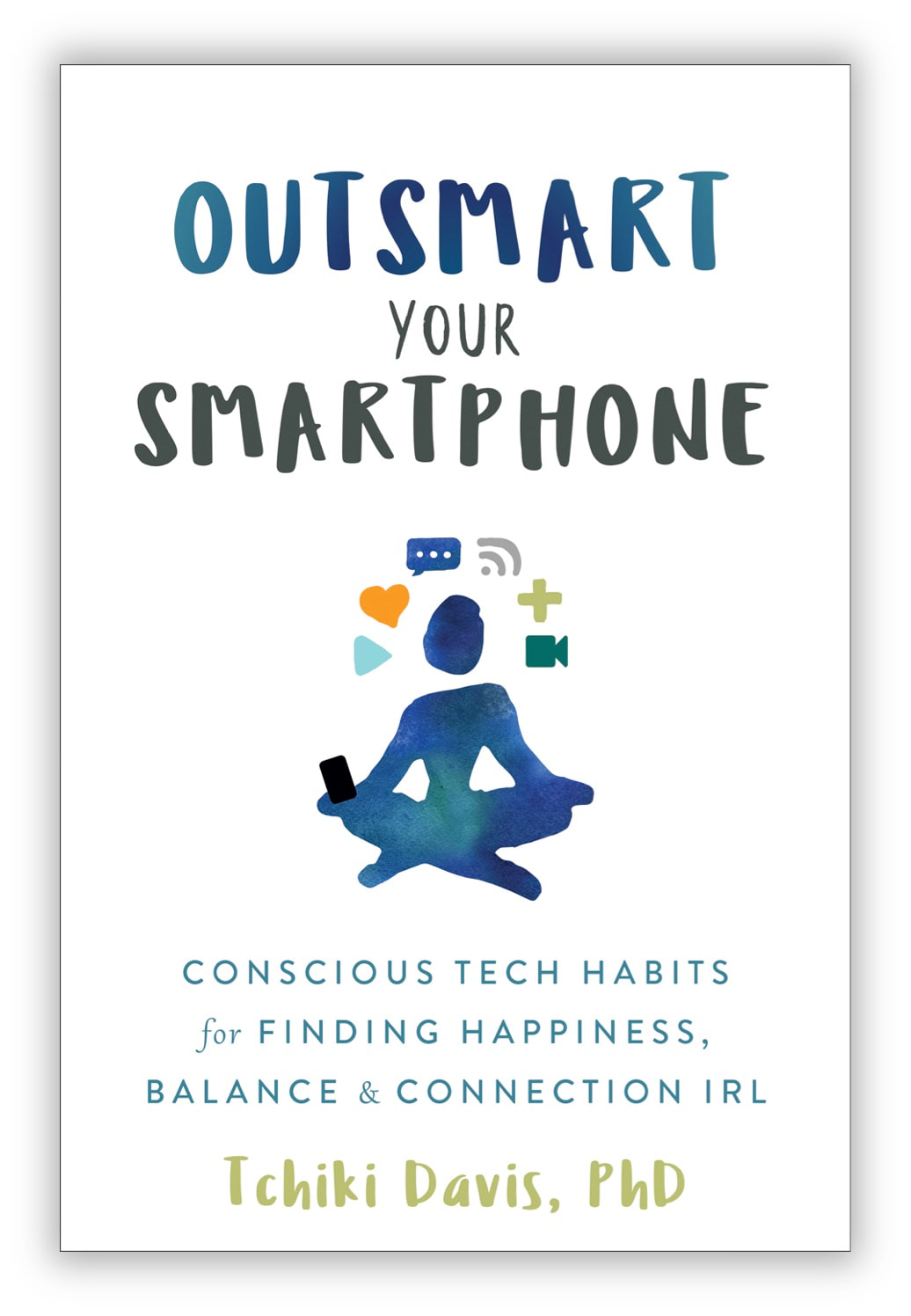
Taking breaks from our phones can help our brains get back to normal, without constant new information coming in all the time. If you want more science-based tips for getting off your phone and using your phone in ways that are better for your well-being, check out my book, Outsmart Your Smartphone. |
|
4. Find Peace of Mind by Listen to Relaxing Binaural Beats
I’ll often put on self-soothing music while working to try to counterbalance stress or tension that often arises during the day. Also, when going through my own stress-induced illness, I found that this type of music was one of the more effective tools because it required no mental effort (and I was already exhausted!) So anytime you feel your mind buzzing, consider popping on some relaxing music and test it out for yourself.
Music: Binaural Beats for Peace of Mind
5. Find Peace of Mind by Getting Outdoors
6. Find Peace of Mind by Turning Down Negative Thoughts
We all have negative thoughts sometimes—the world can be a challenging place to live. But a peaceful mind isn’t cluttered with thoughts about all the bad stuff. So if that’s what we want, we need to learn how to better let go of the negative and embrace the positive. For example, we might try to find more purpose in our lives or purchase a gratitude journal to start recording the things that we’re grateful for. These strategies can help shift our mindsets to be focused more on the good and less on the bad.
7. Find Peace of Mind by Doing the Things You Love

8. Find Peace of Mind by Doing Yoga
Did you know that yoga can actually reduce cortisol (Thirthalli et al., 2013)? Yoga involves deep, controlled breathing and slow careful movements. Ideally, when we’re doing yoga, our mind clears because we are focused so much on our bodies. The benefits may come from the breathing, the focus, or the body movement. But regardless, taking a yoga break may be a good way to clear and calm the mind.
9. Find Peace of Mind With Savoring
Savoring can be a great tool for increasing peace of mind when we really try to sink into what peace of mind feels like. So try to notice when you do feel peace of mind, and then feel it fully. That way you’ll get the most out of the times when your mind does feel peaceful.
10. Find Peace of Mind By Getting a Massage
One study showed that 10, 30-minute massages over five weeks led to a lower cortisol response (Field, 2005). Indeed, soothing physical touch can help relax us, and getting all those aches and pains out of our bodies seems like a good way to release stress. So if a massage suits your taste, get one.
11. Find Peace of Mind With Deep Breathing
One of the simplest ways to activate the parasympathetic nervous system is by taking some deep breaths. Various forms of deep breathing have been shown to reduce anxiety and promote a greater sense of calm (Zope & Zope, 2013). So pause and take a couple of deep breathes when you need to.
Video: Find Inner Peace With Box Breathing
12. Find Peace of Mind With a Dunk in Cold Water
13. Find Peace of Mind With Cognitive Strategies
If you tend to think a lot about the past, challenge yourself to let go. And if you worry a lot about the future, practice trying to be more optimistic. Ask yourself, what has gone well? And what could go well in the future? By focusing on these more positive things, we help put our minds more at ease.
14. Find Peace of Mind by Detoxing Your Stress
If we’ve been stressed for a long time, our bodies are filled with stress hormones—things like cortisol, epinephrine, and norepinephrine. Although our bodies have systems for removing these hormones, they can go awry if we’re stressed for long periods of time. That’s why detoxing our stress, or removing the old stress from our bodies, can really help us get back to feeling like ourselves.

Articles Related to Peace of Mind
Books Related to Peace of Mind
Don’t Forget to Grab Our Free eBook to Learn How to
Grow Your Wellness Business Exponentially!
References
- Charmandari, E., Tsigos, C., & Chrousos, G. (2005). Endocrinology of the stress response. Annu. Rev. Physiol., 67, 259-284.
- Field, T., Hernandez-Reif, M., Diego, M., Schanberg, S., & Kuhn, C. (2005). Cortisol decreases and serotonin and dopamine increase following massage therapy. International Journal of neuroscience, 115(10), 1397-1413.
- Garcia-Argibay, M., Santed, M. A., & Reales, J. M. (2019). Efficacy of binaural auditory beats in cognition, anxiety, and pain perception: a meta-analysis. Psychological Research, 83(2), 357-372.
- Khalfa, S., BELLA, S. D., Roy, M., Peretz, I., & Lupien, S. J. (2003). Effects of relaxing music on salivary cortisol level after psychological stress. Annals of the New York Academy of Sciences, 999(1), 374-376.
- Krick, A., & Felfe, J. (2019). Who benefits from mindfulness? The moderating role of personality and social norms for the effectiveness on psychological and physiological outcomes among police officers. Journal of occupational health psychology.
- Mourot, L., Bouhaddi, M., Gandelin, E., Cappelle, S., Dumoulin, G., Wolf, J. P., … & Regnard, J. (2008). Cardiovascular autonomic control during short-term thermoneutral and cool head-out immersion. Aviation, space, and environmental medicine, 79(1), 14-20.
- Quoidbach, J., Wood, A. M., & Hansenne, M. (2009). Back to the future: The effect of daily practice of mental time travel into the future on happiness and anxiety. The Journal of Positive Psychology, 4(5), 349-355.
- Thirthalli, J., Naveen, G. H., Rao, M. G., Varambally, S., Christopher, R., & Gangadhar, B. N. (2013). Cortisol and antidepressant effects of yoga. Indian journal of psychiatry, 55(Suppl 3), S405.
- Ulrich, R. S., & Parsons, R. (1992). Influences of passive experiences with plants on individual well-being and health. The role of horticulture in human well-being and social development, 93-105.
- Zope, S. A., & Zope, R. A. (2013). Sudarshan kriya yoga: Breathing for health. International journal of yoga, 6(1), 4.
Are You a Therapist, Coach, or Wellness Entrepreneur?
Grab Our Free eBook to Learn How to Grow Your Wellness Business Fast!
