
Secure Attachment: Definition, Examples, & Theory
Secure attachment is trusting that you can rely on the relationships in your life to meet your needs. Let’s look at how secure attachment can be developed – at any age.
*This page may include affiliate links; that means we earn from qualifying purchases of products. |
I was a shy and insecure kid growing up. I hid behind my parents’ knees when we met new people, typically preferred to play by myself, and would ask my parents often if they loved me. When I grew up, my shyness changed. Instead of fearing new people, I might avoid people altogether when I was stressed out, or even when I felt good. There was something that was just too much, or felt too risky, about being close to other people. |
When I learned about attachment styles as a graduate student, I quickly assumed that I was a securely attached person. It took time and therapy for me to see through my denial and to recognize that my behaviors were often not those that securely attached people do. It took a lot of healing, through therapy and new, deeper relationships, for me to develop more of the traits of secure attachment. And just what is secure attachment? What does it look like? How do we become more securely attached? I’ll try to answer all those questions in this article.
Are You a Therapist, Coach, or Wellness Entrepreneur?
Grab Our Free eBook to Learn How to
Grow Your Wellness Business Exponentially!
✓ Save hundreds of hours of time ✓ Earn more $ faster
✓ Boost your credibility ✓ Deliver high-impact content
What Is Secure Attachment? (A Definition)
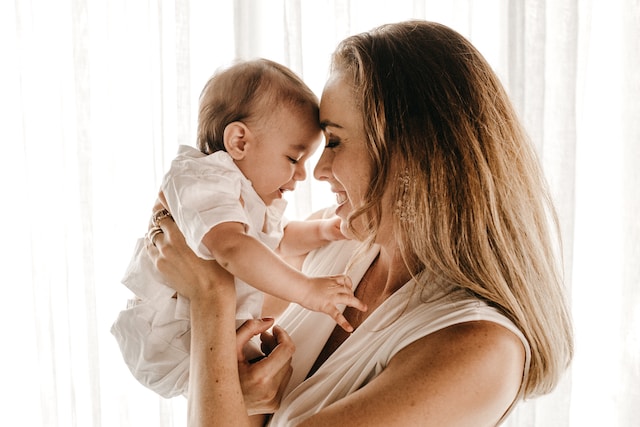
People with secure attachment see the people they are close to – whom in attachment theory we often call “attachment figures” – as both a safe haven and a secure base (Bowlby, 1979). This is probably easier to understand if we think about secure attachment among children first. A securely attached child sees their caregiver as a safe haven: when they are worried or stressed out, they know they can turn to the caregiver for reassurance and support. They also see their caregiver as a secure base – somebody from whom they can safely venture out into the world and explore.
In adult relationships, secure attachment looks similar: it means you can confide in and trust the person, but also trust them to support you as you pursue an independent existence. Importantly, people with secure attachment are able to do this because they know how to ask for both closeness and distance, and they trust other people will not reject them for these needs.
Another way to look at secure attachment is through the official measures that psychologists have created to measure it. For example, the main scale that psychologists use to study attachment in adults breaks down into subscales measuring the ability to be close to others, the ability to depend on others, and fear of being alone or unloved (Kazan & Shaver, 1987). People with a high ability to be close to others, a high ability to depend on others, and low fear of being alone and unloved are said to be securely attached; they also experience more trust in other people, higher self-esteem, and show more positive beliefs about human nature (Collins & Read, 1990).
Why Is Secure Attachment Important?
Our attachment styles form in childhood and are relatively stable as we age (Fraley, 2002). As a therapist, knowing this has often helped me understand my clients quickly. If a client fills out an attachment scale and their scores suggest they are relatively securely attached, I can assume (although I will ask questions to confirm my suspicions) that they probably have or have had some relationships that were close and supportive. This likely includes at least one attachment figure from their childhood, whether it is a parent, grandparent, family friend, or a coach or mentor.

Benefits of Secure Attachment
There are two primary, fascinating findings in this study. First, people with secure attachment styles reported less psychological stress and showed little reactivity to stress in their bodies. Second, their genes associated with stress changed much less over the 12 months than the genes of people with less secure attachment styles. The researchers observed that people with secure attachments seem to be more resilient in the face of stress.
Experimental research suggests that it is the imagining or recalling of attachment figures – people with whom we have experienced secure attachment – that helps us deal effectively with stress. For example, people who cope with frightening situations by thinking of people close to them are less fearful of those situations when they encounter them again (Toumbelekis et al., 2021) – and this is something that it is much easier to do when you are securely attached.
There is also research that indicates that people with more secure attachment are more effective leaders in their professional roles (Ronen & Zuroff, 2017). This seems to be attributable to their ability to form effective relationships and manage conflict.
Causes of Secure Attachment
While early experiences set the foundation for a secure attachment style, adults who did not have responsive and consistent caregivers in childhood can still become securely attached to others when they grow up. This is because each and every relationship has the potential for secure attachment, as long as both people are able to work at it and establish it (Fraley, 2002). In my opinion, a common task for couple therapists is to support their clients in establishing secure attachment for the first time with their partners or spouses. Through deliberate efforts, partners can become safe havens and secure bases for each other (Johnson, 2019).
Examples of Secure Attachment
Both spouses in this scenario demonstrate examples of secure attachment. The wife knew she could raise an issue that was sensitive for her husband – she did not avoid it out of fear of pushing him away or hurting him too much. The husband leaned on a friend for support, instead of trying to deal with it all on his own. He then came back and worked to repair the harm in the relationship, and his wife put her needs out there. These are all the actions of two people that trust that their relationship is resilient enough to handle conflict and that they will continue to love each other through disagreement.
Secure Attachment in Adults

Secure Attachment Characteristics
A primary characteristic of securely attached individuals is that they rely effectively on other people when they feel stressed out or threatened (Hazan & Shaver, 1987). In this case, effectively means that they neither overuse nor underutilize support. People who are insecurely attached, when feeling stressed or fearful, will either cling to sources of support or push them away. Securely attached individuals are able to figure out how much support they need and to ask for it successfully.
Secure vs Insecure Attachment
People with insecure attachment styles experience the world as more threatening – their brain scans even demonstrate this (Karremans et al., 2011). They have become accustomed, typically through a great many distressing personal experiences, to expect that help will not be readily available when they are in a challenging situation.
How to Develop a Secure Attachment
This is easier said than done: building a healthy, secure relationship when one has not experienced this before is no easy task. It takes many experiences over time for these experiences with an effective attachment figure to generalize to our understandings of the world at large (Gillath et al., 2008).
Secure Attachment in Romantic Relationships
Secure Attachment and Therapy
Secure Attachment and Breakups
As you might expect by now, securely attached people have an easier time with romantic relationship breakups. At least one study suggests that people higher in secure attachment are less likely to worry about seeing their exes, less likely to want the person back, less angry at their exes, and ready more quickly to start dating again (Madey & Jilek, 2012).

Articles Related to Secure Attachment
Books Related to Secure Attachment
Final Thoughts on Secure Attachment
I want to end this article on a clear note: while attachment styles tend to be stable, they absolutely can and do change (Waters et al., 2000). Just as negative experiences with attachment figures can lead to insecure attachment, positive experiences of intimacy and relationship can move us toward more secure attachment. This is true in my own personal and professional experience, and I hope it can be in yours, too. If you would like more information about what it is like to be securely attached or be around people with secure attachment, check out the following video:
Video: Secure Attachment
Don’t Forget to Grab Our Free eBook to Learn How to
Grow Your Wellness Business Exponentially!
References
- Bowlby, J. (1979). The Bowlby-Ainsworth attachment theory. Behavioral and Brain Sciences, 2(4), 637–638.
- Brennan, K. A., Clark, C. L., & Shaver, P. R. (1998). Self-report measurement of adult attachment: An integrative overview. In J. A. Simpson & W. S. Rholes (Eds.), Attachment theory and close relationships (pp. 46–76). Guilford Press.
- Caputo, V., Pacilli, M. G., Arisi, I., Mazza, T., Brandi, R., Traversa, A., … & Macrì, S. (2020). Genomic and physiological resilience in extreme environments are associated with a secure attachment style. Translational Psychiatry, 10(1), 185.
- Collins, N. L., & Read, S. J. (1990). Adult attachment, working models, and relationship quality in dating couples. Journal of Personality and Social Psychology, 58(4), 644–663.
- Dansby Olufowote, R. A., Fife, S. T., Schleiden, C., & Whiting, J. B. (2020). How can I become more secure? A grounded theory of earning secure attachment. Journal of Marital and Family Therapy, 46(3), 489-506.
- Feeney, J. A., & Noller, P. (1990). Attachment style as a predictor of adult romantic relationships. Journal of Personality and Social Psychology, 58(2), 281–291.
- Fraley, R. (2002). Attachment stability from infancy to adulthood: Metaanalysis and dynamic modeling of developmental mechanisms. Personality and Social Psychology Review, 6(2), 123–151.
- Gillath, O., Selcuk, E., & Shaver, P. R. (2008). Moving toward a secure attachment style: Can repeated security priming help? Social and Personality Psychology Compass, 2(4), 1651-1666.
- Hazan, C., & Shaver, P. (1987). Romantic love conceptualized as an attachment process. Journal of Personality and Social Psychology, 52(3), 511-524.
- Johnson, S. (2019). Attachment in action—changing the face of 21st century couple therapy. Current Opinion in Psychology, 25, 101-104.
- Karremans, J. C., Heslenfeld, D. J., van Dillen, L. F., & Van Lange, P. A. (2011). Secure attachment partners attenuate neural responses to social exclusion: an fMRI investigation. International Journal of Psychophysiology, 81(1), 44-50.
- Madey, S. F., & Jilek, L. (2012). Attachment style and dissolution of romantic relationships: Breaking up is hard to do, or is it? Individual Differences Research, 10(4), 202-210.
- Mikulincer, M., & Shaver, P. R. (2012). An attachment perspective on psychopathology. World Psychiatry, 11(1), 11–15.
- Mikulincer, M., & Shaver, P. R. (2016). Attachment in adulthood: structure, dynamics, and change (2nd ed.). Guilford.
- Roisman, G. I., Padrón, E., Sroufe, L. A., & Egeland, B. (2002). Earned–secure attachment status in retrospect and prospect. Child Development, 73(4), 1204-1219.
- Ronen, S., & Zuroff, D. C. (2017). How does secure attachment affect job performance and job promotion? The role of social-rank behaviors. Journal of Vocational Behavior, 100, 137-148.
- Saunders, R., Jacobvitz, D., Zaccagnino, M., Beverung, L. M., & Hazen, N. (2011). Pathways to earned-security: The role of alternative support figures. Attachment & Human Development, 13(4), 403-420.
- Simpson, J. A. (1990). Influence of attachment styles on romantic relationships. Journal of Personality and Social Psychology, 59(5), 971–980.
- Toumbelekis, M., Liddell, B. J., & Bryant, R. A. (2021). Secure attachment primes reduce fear consolidation. Depression and Anxiety, 38(10), 1078-1086.
- Waters, E., Merrick, S., Treboux, D., Crowell, J., & Albersheim, L. (2000). Attachment security in infancy and early adulthood: A twenty-year longitudinal study. Child Development, 71, 684–689.
Are You a Therapist, Coach, or Wellness Entrepreneur?
Grab Our Free eBook to Learn How to Grow Your Wellness Business Fast!
