
Psychology of Stress: Definition, Examples, & Causes
Read on to learn about the psychology of stress and some strategies that can help manage and mitigate its impact.
*This page may include affiliate links; that means we earn from qualifying purchases of products. |
Stress involves changes that affect nearly every system in the body. It’s fairly well-known that chronic stress has negative effects on mental and physical health. However, a manageable amount of stress can also benefit us. Much depends on the type of stress and how we respond to it.
So, how do we learn to respond to it in healthy ways? |
The psychology of stress helps us to understand the causes of stress, how it affects our health and well-being, and how to develop healthy ways of responding to it or coping with it. In this article, we’ll explore these aspects of this important field of study as well as provide some techniques and suggestions for stress management.
Are You a Therapist, Coach, or Wellness Entrepreneur?
Grab Our Free eBook to Learn How to
Grow Your Wellness Business Exponentially!
✓ Save hundreds of hours of time ✓ Earn more $ faster
✓ Boost your credibility ✓ Deliver high-impact content
What Is the Psychology of Stress? (A Definition)
The psychology of stress also seeks to understand what causes the experience of stress, individual differences in how we perceive and respond to stress, as well as the short-term and long-term consequences of stress on physical and mental health. Furthermore, it explores coping mechanisms and strategies we adopt to manage and alleviate stress, which can vary widely among individuals.
Video: The Psychology of Stress
Why Is the Psychology of Stress Important?
- Health and Well-being: Chronic stress can lead to health problems, such as cardiovascular issues, weakened immune systems, cancer, gastrointestinal disorders, and mental health disorders like anxiety and depression (Mariotti, 2015). Understanding the psychological aspects of stress helps identify its triggers, effects, and coping mechanisms, ultimately promoting better overall health and well-being.
- Coping Strategies: By studying stress psychology, researchers can identify effective coping strategies that help us manage stress in healthy ways.
- Resilience: Understanding the psychology of stress can help us build resilience. Resilience is the ability to bounce back from adversity, and it plays a crucial role in how individuals handle stressors.
- Workplace Productivity: Stress affects work performance, job satisfaction, and employee well-being. Employers can benefit from understanding stress psychology to create supportive work environments, reduce stressors, and implement effective stress management programs (Bickford, 2005).
- Relationships: Stress can strain personal relationships, impacting communication and emotional connections. By understanding the psychological aspects of stress, we can develop empathy, communication skills, and support strategies to maintain healthier relationships.
- Public Health: Stress-related health issues can have a significant impact on public health systems and costs. Understanding the psychology of stress helps guide the design of targeted interventions and public health campaigns to address stress-related health concerns.
- Performance and Learning: Stress can affect cognitive functioning and academic performance. Understanding stress psychology in educational settings can lead to the development of better learning environments and support systems for students.
- Preventive Medicine: By studying the potential psychological impact of stress, individuals and healthcare providers can take proactive steps to prevent stress-related health issues from escalating.
- Self-awareness and Self-care: Understanding stress psychology enables us to be more self-aware, recognizing our stress triggers and patterns. This awareness empowers us to engage in self-care practices and seek support when needed.

Psychology of Stress & the Lazarus Theory
The model includes two processes or stages (Lazarus & Folkman, 1987):
- Primary appraisal: During primary appraisal, we assess the significance of the stressor. We determine whether the stressor is irrelevant, benign, or stressful. If the stressor is perceived as stressful, it moves on to the secondary appraisal.
- Secondary appraisal: After identifying a situation as stressful, we evaluate our coping resources and options for dealing with the stressor. We assess our ability to handle the situation and the potential strategies we can employ. Coping strategies can be problem-focused (aimed at directly addressing the stressor) or emotion-focused (aimed at managing emotional reactions to the stressor).
Psychology of stress: An example
For example, let’s say you have an upcoming deadline for a major project at work. The three ways you can interpret the situation are:
- Irrelevant: An irrelevant appraisal might be that missing the deadline doesn’t matter since it won’t impact your career, so you don’t feel stressed.
- Benign: With a benign appraisal, you might see the deadline as a challenge but also as an opportunity to show off your skills. So, it doesn’t feel particularly stressful.
- Stressful: If you’re worried about not meeting expectations, potential consequences, or the workload required, then you’ll view the situation as stressful. Since you’ve evaluated the situation as stressful, this brings you to the secondary appraisal where you consider coping strategies.
Coping strategies could include:
- Problem-focused: You break the project into smaller tasks and create a detailed plan. You allocate specific time blocks for each task and set priorities.
- Emotion-focused: You might also engage in emotion-focused coping, such as taking short breaks to manage your stress levels, practicing relaxation techniques, or venting to a friend.
Take the stress quiz here.
Psychological Stress Causes
- Work & family: We often experience stress when we feel like we can’t handle all the demands placed on us. This type of pressure typically comes from a demanding job or feeling overwhelmed trying to meet the needs of friends and family members.
- Finances: Common financial stressors include, struggling with debt, not making enough money to live comfortably, and unexpected expenses.
- Health issues: This includes dealing with a chronic condition of your own or worrying about the health of a loved one.
- Major life events: The Holmes and Rahe Stress Scale is a well-known measure of how much stress we typically feel from different life events. It ranks these events on a scale from 1 to 100, with the death of a spouse topping the list at 100. Of course, we can experience plenty of stress from other less dramatic events like moving, getting married, or having a baby.
- Academic pressure: Stress among students is common due to academic performance expectations, exams, and assignments.
- Social pressures: This includes societal expectations, discrimination, or feeling the need to conform to certain norms.
- Technology and information overload: Constant exposure to technology, social media, and the 24/7 news cycle can lead to overwhelm.
- Uncertainty about the future: Fear of the unknown, whether it’s related to personal or global events, can cause stress and anxiety.
Psychological Stress Factors
- Health behaviors: Smoking, alcohol or drug use, overeating (Cheon et al., 2020).
- Poor sleep: Both sleeping too little and too much are associated with increased stress. (Cheon et al., 2020)
- Loneliness: Studies show loneliness increases your level of perceived stress (Cacioppo et al., 2006). In addition, not having strong social support makes it harder to cope with stress.
- Poor body image: A study showed that having a poor body image creates psychological stress. Interestingly, the image you have of your body has a greater effect on stress than being over (or under) weight (Cheon et al., 2020). This is an example of how our interpretations of ourselves and the world can affect stress levels.
- Genetics: Certain personality types may be more prone to experiencing stress such as those of us that tend toward perfectionism and pessimism, or have difficulty coping with change. These traits are partially linked to genetics (Luo et al., 2017).
- Trauma and abuse: Past traumatic experiences, such as physical or emotional abuse, can have long-lasting effects on a person’s stress levels.
- Environmental stressors: It’s pretty easy to imagine how things like living in a high-crime area or dealing with natural disasters would be huge contributors to stress.
Psychological Stress Reactions
- Fight-or-flight response: Most of us have heard of this traditional view of the body’s stress response, where the body prepares itself to confront a threat or flee from it. During this response, stress hormones like adrenaline and cortisol are released, heart rate increases, and energy is diverted to essential functions.
- Challenge response: Stress can be perceived in a positive light when viewed as a challenge rather than a threat. When people see a stressful situation as an opportunity to grow and rise to the occasion, their body’s physiological response can become more adaptive. This can lead to increased focus, motivation, and resilience.
- Tend-and-befriend response: In addition to fight-or-flight, McGonigal proposes that there is another stress response that is more common in women and some men. The “tend-and-befriend” response involves seeking social support and connection during times of stress. This response can lead to the release of oxytocin, a hormone that promotes bonding and reduces stress. You may have heard it referred to as the “cuddle hormone” because it’s released when we’re affectionate.
- Freeze or tonic immobility: In some situations, people may experience a state of immobility or “freezing” when faced with overwhelming stress or trauma. This response is observed in animals when they play dead in response to predators. In humans, it might manifest as feeling paralyzed or unable to take action during highly stressful events.
Kelly McGonigal also points out that individual differences play a role in how people react to stress. Some people may be more prone to stress-related reactions due to genetic factors, early life experiences, or learned coping strategies.

Psychological Stress Physical Symptoms
- Muscle tension and pain: When we’re under stress, we automatically tense muscles. When the stress is chronic, it can lead to tension headaches, neck pain, back pain, and overall muscle aches (American Psychological Association, 2023).
- Sleep disturbances: When under stress, many people have trouble falling asleep or staying asleep. Or at the other end of the spectrum, some sleep too much.
- Difficulty breathing: Shortness of breath and rapid breathing are signs of stress (Chu et al., 2022). This is especially true if stress rises to the level that it triggers a panic attack.
- Heart Palpitations and Chest Pain: Stress can cause the heart to beat faster or irregularly, leading to palpitations and chest discomfort. I know someone who thought she was having a heart attack and went to the hospital only to be told it was a panic attack.
- Digestion troubles: Stress can disrupt the normal functioning of the digestive system leading to symptoms such as stomach pain, bloating, and nausea. It’s also associated with changes in gut bacteria which can influence mood (American Psychological Association, 2023).
- Headaches and Migraines: Stress can trigger or worsen headaches in people who are susceptible (American Psychological Association, 2023).
- Cardiovascular disease: Chronic stress is associated with an increased risk of hypertension, heart attacks, and stroke (American Psychological Association, 2023).
- Compromised immune system: Prolonged stress can weaken the immune system, making you more susceptible to infections and illnesses (American Psychological Association, 2023).
Video: Stress and Your Body: Psychology of Stress
The Psychological Stress Scale
Psychological Stress and the Coping Process
There are different types of coping strategies—which one works best depends on the individual and the type of stress. These are the four major categories (Algorani & Gupta, 2023):
Problem-focused coping: This involves actively addressing the stressor and trying to find a solution or make changes to the situation causing stress. This is a good approach when the stressor can be changed or controlled (which isn’t always the case).
Emotion-focused coping: This coping style aims to reduce negative emotional responses to stress without necessarily addressing the stressor itself. This may involve strategies like positive reframing, accepting the situation, or using humor. Sometimes, accepting a stressful situation instead of fighting it or finding some humor in it brings relief.
Social Coping: Seeking support from friends, family, or support groups can be a valuable coping mechanism. Talking to others about the stressor and receiving empathy or advice helps us feel less alone and better equipped to handle the situation.
Meaning-focused Coping: This approach involves finding or creating meaning and understanding in the face of stressful or challenging situations. Rather than directly addressing the stressor or solely focusing on emotional regulation, individuals who use meaning-focused coping try to make sense of their experiences and find significance in them. This approach can help individuals find a sense of purpose and maintain a positive outlook even in difficult circumstances.
Psychological Stress Management Techniques
- Mindfulness and Meditation: Practicing mindfulness and meditation can help you stay present in the moment and reduce anxiety. Regular meditation sessions can help you calm down the mind and promote relaxation. Here’s a simple mediation practice you can try:
- If possible, find a quiet place to sit or lie down.
- Keep your spine upright if sitting or straight if lying down.
- Close your eyes or keep your gaze soft and still.
- Direct your attention to your breath. Breathe normally, taking soft smooth inhalations and exhalations.
- When your attention drifts away from your breath and to whatever is stressing you out, notice that, and gently move your attention back to the breath.
- Repeat. Do this for at least 10 minutes or longer if possible, but even a couple of minutes can help.
- Regular Exercise: A study found that people who exercise regularly are less affected by stressful situations than people who don’t exercise. It makes us more resilient to stress (Childs & de Wit, 2014).
- Healthy Diet: Eating a balanced, clean diet with plenty of fruits, vegetables, and whole grains can support your body in dealing with stress.
- Adequate Sleep: Ensuring you get enough quality sleep is vital for stress management. Sleep allows the body and mind to recharge and recover. If you have trouble getting to sleep or staying asleep, there are lots of resources that advise on “sleep hygiene”. Some of this advice includes keeping a consistent sleep schedule, staying off devices before bedtime, avoiding large meals, establishing a relaxing bedtime routine, and exercising regularly (AASM, 2021).
- Deep Breathing: It sounds simple, but it’s effective. That’s because the breath rate is connected to the parasympathetic nervous system or the “rest and digest” system.
- If possible, find a quiet place to sit or lie down.
- First, take a normal breath.
- Then take a slow, smooth inhalation, through your nose, allowing your chest and abdomen to expand as you feel your lungs fill with air.
- When you reach the top, exhale slowly and smoothly through your mouth (or your nose if that feels more natural).
- You can do several in a row, or take a normal breath in between.
- Social Support: Talking to friends, family, or a support group can help you share your feelings and reduce emotional stress. And having strong social support can make you more resilient against the negative effects of stress (Ozbay et al., 2007).
- Time Management: Organizing your time and setting realistic goals can reduce feelings of being overwhelmed.
- Stress Journaling: Keeping a journal can help you identify sources of stress and develop healthier coping mechanisms. At the least, you get it out there instead of continually internalizing it.
- Limiting Caffeine and Alcohol: High caffeine and alcohol intake can exacerbate stress and anxiety.
- Relaxation Techniques: Engaging in activities like reading, listening to music, taking a warm bath, or spending time in nature can help you relax and unwind.
- Progressive Muscle Relaxation: This technique involves tensing and relaxing muscle groups to promote physical and mental relaxation. Numerous studies suggest this is a useful way to reduce stress (Toussaint et al., 2021).
- Mindful Walking: Taking a walk while staying aware of your surroundings can be a meditative and calming experience. A study showed participants who participated in a mindful walking program had reduced psychological stress symptoms and improved quality of life compared to the control group who didn’t participate in the program (Teut et al., 2013).
Psychological Stress Treatment
- Psychotherapy: If stress becomes overwhelming or chronic, seeking guidance from a mental health professional, such as a therapist or counselor, can be beneficial. Talking to a supportive and understanding therapist can provide a safe space to express feelings and gain insights into stress triggers and coping strategies.
- Cognitive-Behavioral Therapy (CBT): CBT is a widely used form of therapy that helps individuals identify and change negative thought patterns and behaviors contributing to stress. It aims to replace unhealthy coping strategies with healthier ones.
- Mindfulness-Based Stress Reduction (MBSR): MBSR combines mindfulness meditation and yoga techniques to help individuals become more aware of their thoughts and emotions and learn to manage stress in a non-judgmental way.
- Medication: In some cases, healthcare professionals may prescribe medications such as antidepressants or anti-anxiety drugs to help manage stress and related symptoms. However, medication is usually used in conjunction with therapy.
- Therapeutic yoga: Many studies demonstrate the potential benefits of yoga for stress management (Woodyard, 2011). When I became a yoga teacher, I learned about specific sequences of poses that promote calm. In most of the poses, the head is below your heart, which reduces blood pressure and triggers a relaxation response. In addition, paying close attention to what is going on in your body when practicing yoga can serve to disrupt stressful thought patterns.
- Biofeedback: This technique involves using electronic devices to monitor and gain control over certain bodily functions (e.g., heart rate, muscle tension) to promote relaxation.
- Acupuncture: While not conclusive, there is some evidence suggesting acupuncture may help reduce stress. Some studies indicate it does this by reducing the levels of stress hormones and increasing the release of endorphins, which are the body’s natural painkillers and mood enhancers. It’s now even covered by some insurance policies.
The Psychological Stress Performance Curve
When we’re sluggish or bored we’re not able to perform at our best. Imagine a repetitive job that is unchallenging. You’re likely to make mistakes even though it’s easy—interest and attention are just not there. As stress goes up, your performance improves. It increases cortisol, a hormone that makes you more alert, sharper. But it reaches a point of diminishing returns. If the stress level gets too high, to the point where you no longer find it manageable, your performance gets worse. You’ll find yourself so nervous that you’re unable to focus.
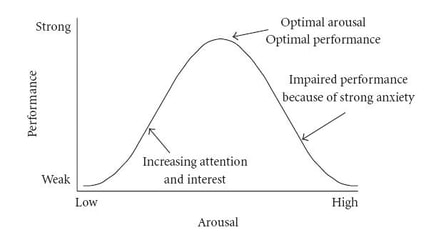
This suggests that approaching problems with too much stress can be worse than being a little more relaxed about it. This is especially true for those of us (and I include myself), that tend toward perfectionism. It is possible to “try too hard”.

Articles Related to The Psychology of Stress
Books Related to The Psychology of Stress
Final Thoughts on The Psychology of Stress
Stress is not just a simple emotional response; it involves complex interactions between our cognitive, emotional, and physiological systems. Understanding its underlying mechanisms is crucial for developing effective coping strategies and interventions. Fortunately, there’s a lot of science indicating that the way we respond to stress can have a big effect on how we experience it. The study of the psychology of stress gives us a better understanding of the causes of stress and helps us learn healthy ways to respond to it, which promotes overall well-being and helps us lead healthier, more resilient lives.
Don’t Forget to Grab Our Free eBook to Learn How to
Grow Your Wellness Business Exponentially!
References
- AASM. (2021, April 2). Healthy sleep habits. Sleep Education. https://sleepeducation.org/healthy-sleep/healthy-sleep-habits/
- American Psychological Association. (2023, March 8). Stress effects on the body.
- Algorani, E. B., & Gupta, V. (2023, April 24). Coping mechanisms – statpearls – NCBI bookshelf. Coping Mechanisms. https://www.ncbi.nlm.nih.gov/books/NBK559031/
- Bickford, M. (2005). Stress in the Workplace: A General Overview of the Causes, the Effects, and the Solutions. Canadian Mental Health Association Newfoundland and Labrador Division, 44.
- Cacioppo, J. T., Hughes, M. E., Waite, L. J., Hawkley, L. C., & Thisted, R. A. (2006). Loneliness as a specific risk factor for depressive symptoms: cross-sectional and longitudinal analyses. Psychology and aging, 21(1), 140.
- Cheon, Y., Park, J., Jeong, B. Y., Park, E. Y., Oh, J. K., Yun, E. H., & Lim, M. K. (2020). Factors associated with psychological stress and distress among Korean adults: the results from Korea National Health and Nutrition Examination Survey. Scientific reports, 10(1), 15134.
- Childs, E., & De Wit, H. (2014). Regular exercise is associated with emotional resilience to acute stress in healthy adults. Frontiers in physiology, 161.
- Lazarus, R. S., & Folkman, S. (1987). Transactional theory and research on emotions and coping. European Journal of personality, 1(3), 141-169.
- Luo, J., Derringer, J., Briley, D. A., & Roberts, B. W. (2017). Genetic and environmental pathways underlying personality traits and perceived stress: Concurrent and longitudinal twin studies. European Journal of Personality, 31(6), 614-629.
- Chu, B., Marwaha, K., Sanvictores, T., & Ayers, D. (2022, September 12). Physiology, stress reaction – statpearls – NCBI bookshelf. National Library of Medicine. https://www.ncbi.nlm.nih.gov/books/NBK541120/
- Mariotti, A. (2015). The effects of chronic stress on health: new insights into the molecular mechanisms of brain–body communication. Future science OA, 1(3).
- McGonigal, K. (2016). The upside of stress: Why stress is good for you, and how to get good at it. Penguin.
- Ozbay, F., Johnson, D. C., Dimoulas, E., Morgan Iii, C. A., Charney, D., & Southwick, S. (2007). Social support and resilience to stress: from neurobiology to clinical practice. Psychiatry (edgmont), 4(5), 35.
- Teut, M., Roesner, E. J., Ortiz, M., Reese, F., Binting, S., Roll, S., … & Brinkhaus, B. (2013). Mindful walking in psychologically distressed individuals: A randomized controlled trial. Evidence-Based Complementary and Alternative Medicine, 2013.
- Toussaint, L., Nguyen, Q. A., Roettger, C., Dixon, K., Offenbächer, M., Kohls, N., … & Sirois, F. (2021). Effectiveness of progressive muscle relaxation, deep breathing, and guided imagery in promoting psychological and physiological states of relaxation. Evidence-Based Complementary and Alternative Medicine, 2021.
- Woodyard, C. (2011). Exploring the therapeutic effects of yoga and its ability to increase quality of life. International journal of yoga, 4(2), 49.
Are You a Therapist, Coach, or Wellness Entrepreneur?
Grab Our Free eBook to Learn How to Grow Your Wellness Business Fast!
