
Float Therapy: Definition, Benefits, & Side Effects
Learn all about float therapy, its benefits, risks, and what a float therapy session is like.
*This page may include affiliate links; that means we earn from qualifying purchases of products. |
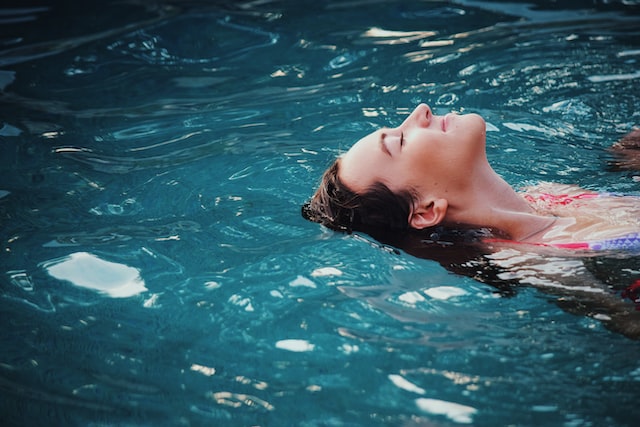
There are a number of new methods that are being used to reduce stress. Float therapy is one of them. Indeed, floating in water can be a very relaxing experience. In this article, we’ll talk about what float therapy is, how it can be beneficial for well-being, and some mild side effects that can emerge during a float therapy session. |
Are You a Therapist, Coach, or Wellness Entrepreneur?
Grab Our Free eBook to Learn How to
Grow Your Wellness Business Exponentially!
✓ Save hundreds of hours of time ✓ Earn more $ faster
✓ Boost your credibility ✓ Deliver high-impact content
What Is Float Therapy? (A Definition)
Benefits of Float Therapy
- Reducing stress and anxiety: Several studies have found that float therapy can significantly reduce stress and anxiety in individuals (Feinstein et al., 2018; van Dierendonck & Te Nijenhuis, 2005).
- Improving sleep: Float therapy has been shown to improve sleep quality in individuals with insomnia (Norell-Clarke et al., 2022).
- Promoting relaxation: Float therapy has been found to significantly increase feelings of relaxation in individuals (Jacobs et al., 1984).
- Improving creativity: Float therapy has been shown to improve performance on tasks requiring creative problem-solving (Norlander et al., 1998).
- Aiding in physical recovery from injuries: Some research suggests that float therapy may help to reduce muscle soreness and improve recovery following exercise (Broderick et al., 2019; Kjellgren et al., 2001).

Float Therapy for Couples
Float therapy can be a relaxing and enjoyable experience for couples. Some people choose to book a private float therapy room or tank specifically designed for couples, while others prefer to float separately in individual tanks.
One of the benefits of float therapy for couples is that it can provide an opportunity for both partners to relax and unwind together, without any distractions. The sensory deprivation environment of the float tank can help to create a sense of intimacy and connection, as couples are able to focus on each other and their surroundings without the distractions of everyday life.
In addition to providing a chance for relaxation and bonding, float therapy may also have other potential benefits for couples. For example, float therapy may help improve communication and connection between partners, as the relaxation and sensory deprivation environment can facilitate deeper conversations and introspection.
Float Therapy Cost
The cost of float therapy can vary depending on where you live and the specific location or facility you go to. Some float therapy centers offer a range of pricing options, such as single sessions or packages of multiple sessions at a discounted rate.
In general, you can expect to pay anywhere from $50 to $100 or more for a single float therapy session. Some facilities may offer discounts for first-time clients, students, military personnel, or seniors. Some insurance plans may also cover float therapy as a form of alternative or complementary medicine, so it’s worth checking with your provider to see if any part of the cost may be covered.
It’s also worth noting that some float therapy centers offer membership programs, which can provide access to discounted rates on float sessions as well as other amenities and perks. These membership programs can be a good option for those who plan to use float therapy regularly.
Overall, it’s a good idea to research and compare the costs at different float therapy centers in your area to find the best option for your budget.

Float Therapy Side Effects
Dizziness or disorientation
One potential side effect of float therapy is dizziness or disorientation (Leiderman et al., 1958). This may be more likely to occur if you are not used to the sensation of floating or if you have a history of motion sickness. It is important to listen to your body and stop the session if you are feeling dizzy or uncomfortable.
Dry skin or irritation
Another potential side effect is dry skin or irritation. This can be caused by the high concentration of Epsom salt in the water, which can be drying to the skin. It is recommended to shower after your float session and to moisturize your skin to prevent dryness or irritation.
Hallucinations
It is also possible to experience hallucinations or altered states of consciousness during float therapy, due to the sensory deprivation environment (Schulman et al., 1967). These experiences are typically temporary and not harmful, but it is important to be aware that they can occur.
Overall, float therapy is considered to be a safe and effective relaxation technique, with a low risk of side effects. However, it is always a good idea to consult with a healthcare provider before starting any new therapy or treatment.
Video: Testing Flotation Therapy
Float Therapy When Pregnant
There are a few considerations to keep in mind if you are pregnant and considering float therapy:
- The sensory deprivation environment of the float tank may cause some pregnant women to feel anxious or claustrophobic. If you have a history of anxiety or claustrophobia, or if you are prone to panic attacks, float therapy may not be the best option for you.
- The high concentration of Epsom salt in the water may cause some dryness or irritation to the skin. It is important to moisturize your skin after your float session to prevent dryness or irritation.
- Some pregnant women may experience dizziness or disorientation during float therapy due to the sensation of floating or the change in blood pressure. It is important to listen to your body and stop the session if you are feeling dizzy or uncomfortable.
Does Float Therapy Work?
However, it is important to note that although float therapy seems to be beneficial for reducing stress and improving well-being and performance in many people (Dierendonck & Te Nijenhuis, 2005), it is not effective for everyone. If you are seeking to treat existing physical or mental health issues, it is important to check with your doctor before trying float therapy.
Float Therapy for Anxiety
Example Float Therapy Session
- Upon arrival at the float therapy center, you will be greeted by the staff and given a brief orientation to the facility and the float tank.
- You will be shown to a private room or shower area where you can change into a swimsuit or disposable underwear provided by the center.
- You will be given earplugs to wear during the session to keep the water out of your ears.
- You will be guided to the float tank, which is typically a small, enclosed space filled with a shallow pool of water that is saturated with Epsom salt. The water is heated to skin temperature and the tank is designed to be completely dark and soundproof.
- You will be given a brief demonstration on how to use the float tank, including how to get in and out of the tank and how to adjust the lighting and music inside the tank.
- You will be left alone in the tank to float and relax. You can choose to close the tank’s door or leave it open, depending on your preference.
- During the session, you can choose to focus on your breath or listen to guided meditation or music provided by the center. You can also simply relax and let your mind wander.
- When the session is over, you will be signaled by the center staff to exit the tank.
- After the session, you will be given a shower to rinse off the Epsom salt and a towel to dry off.
- You will then have the opportunity to relax in a quiet area or have a post-float debrief with the center staff.
Overall, the goal of a float therapy session is to provide a relaxing and sensory-deprived environment for you to unwind and recharge. The specific details of the session may vary depending on the specific float therapy center you go to.
How To Make The Most of a Float Therapy Session
- Arrive at the float therapy center well-hydrated and well-fed. It is a good idea to drink plenty of water and have a light meal before your session to ensure that you are comfortable during the float.
- Take a shower before entering the float tank. This will help to rinse off any lotions, oils, or perfumes that could interfere with the float experience.
- Bring earplugs to use during the session. The water in the float tank is saturated with Epsom salt, which can be drying to the ears. Wearing earplugs can help to keep the water out of your ears and prevent discomfort.
- Use the float tank as an opportunity to relax and let go of any distractions or worries. It can be helpful to set an intention for the float before getting in the tank, such as focusing on your breath or letting go of stress.
- If you are feeling anxious or claustrophobic, it is important to listen to your body and stop the session if necessary. It is also a good idea to inform the center staff of any concerns or issues you may have before the session.
- After the float, take a shower. Rinse off the Epsom salt and moisturize your skin to prevent dryness or irritation.
- After the float, drink water. It is also a good idea to drink plenty of water to rehydrate.
By following these tips, you can make the most of your float therapy experience and get the most out of the session.

Articles Related to Float Therapy
Books Related to Float Therapy
Final Thoughts on Float Therapy
Video: What is Float Therapy? Explained in Three Minutes
Don’t Forget to Grab Our Free eBook to Learn How to
Grow Your Wellness Business Exponentially!
References
- Broderick, V., Uiga, L., & Driller, M. (2019). Flotation-restricted environmental stimulation therapy improves sleep and performance recovery in athletes. Performance Enhancement & Health, 7(1-2), 100149.
- Feinstein, J. S., Khalsa, S. S., Yeh, H., Al Zoubi, O., Arevian, A. C., Wohlrab, C., … & Paulus, M. P. (2018). The elicitation of relaxation and interoceptive awareness using floatation therapy in individuals with high anxiety sensitivity. Biological psychiatry: cognitive neuroscience and neuroimaging, 3(6), 555-562.
- Jacobs, G. D., Heilbronner, R. L., & Stanley, J. M. (1984). The effects of short term flotation REST on relaxation: a controlled study. Health Psychology, 3(2), 99.
- Kent, M. (2017). Food & Fitness: A Dictionary of Diet & Exercise. Oxford University Press.
- Kjellgren, A., Sundequist, U., Norlander, T., & Archer, T. (2001). Effects of flotation-REST on muscle tension pain. Pain Research and Management, 6(4), 181-189.
- Leiderman, H., Mendelson, J. H., Wexler, D., & Solomon, P. (1958). Sensory deprivation: clinical aspects. AMA archives of internal medicine, 101(2), 389-396.
- Norell-Clarke, A., Jonsson, K., Blomquist, A., Ahlzén, R., & Kjellgren, A. (2022). A study of flotation-REST (restricted environmental stimulation therapy) as an insomnia treatment. Sleep Science, 15(Spec 2), 361.
- Norlander, T., Bergman, H., & Archer, T. (1998). Effects of flotation REST on creative problem solving and originality. Journal of Environmental Psychology, 18(4), 399-408.
- Schulman, C. A., Richlin, M., & Weinstein, S. (1967). Hallucinations and disturbances of affect, cognition, and physical state as a function of sensory deprivation. Perceptual and Motor Skills, 25(3), 1001-1024.
- van Dierendonck, D., & Te Nijenhuis, J. (2005). Flotation restricted environmental stimulation therapy (REST) as a stress-management tool: A meta-analysis. Psychology & Health, 20(3), 405-412.
Are You a Therapist, Coach, or Wellness Entrepreneur?
Grab Our Free eBook to Learn How to Grow Your Wellness Business Fast!
