
Deception: Definition & Psychology
Learn about deception in everyday life, in research, and if it’s possible to detect when we’re being deceived.
*This page may include affiliate links; that means we earn from qualifying purchases of products. |
From telling “white lies’ to spare someone’s feelings, to enormous Ponzi schemes that con people out of their life savings, deception is a universal human behavior that’s deeply ingrained in our lives. Studies show we lie an average of once or twice a day. But the majority of lies are told by a handful of prolific liars (Verigin, et al., 2019). |
In this article, we’ll explore these questions. We’ll discuss types of deception, its use in psychological research, and whether there are reliable indicators that allow us to detect when someone is lying.Are You a Therapist, Coach, or Wellness Entrepreneur?
Grab Our Free eBook to Learn How to
Grow Your Wellness Business Exponentially!
✓ Save hundreds of hours of time ✓ Earn more $ faster
✓ Boost your credibility ✓ Deliver high-impact content
What Is Deception? (A Definition)
People deceive for lots of reasons – to protect someone’s feelings, to avoid punishment or unwanted consequences, to make themselves look better, or for personal gain. And one of the most common forms of deception is self-deception, which is usually done to bolster self-confidence or avoid an uncomfortable situation.
Deception Vs. Lies

Opposite of Deception
Examples of Deception
- Social lies: Commonly known as “white lies”, these are the typical things we say to avoid hurting others’ feelings or to gain social approval. Examples – “I like your new haircut!”, or texting “On my way”.
- Outright lies: The most straightforward form of deception, lying includes things like adding made-up experience to your resume to lying on the witness stand.
- Withholding information: For example, your partner asks how your day at work was, and you shrug it off when you were laid off. Or a pharmaceutical company doesn’t disclose known side effects of medication.
- Concealment: Concealment is the act of hiding something or preventing it from being known. An example is when President Nixon refused to give up the Watergate tapes. Or perhaps you hide a large purchase from your partner because you know they’ll be upset.
- Half-truth: This form of deception involves telling part of the truth, but purposely leaving out crucial details with the intention to manipulate or mislead. For example, a company may claim that studies show their product is successful in weight loss. However, the company fails to mention that they performed the study and that independent studies have not confirmed their results. Or, they don’t reveal that their study was performed with a small sample size or for a short duration, which has an impact on the validity of the results.
- Distortions/Exaggeration: For example, “This was the largest audience ever to witness an inauguration, period, both in person and around the globe.”
- Self-deception: One of the most common self-deceptions is to overestimate our abilities and underestimate our limitations to bolster self-esteem. This can have both positive and negative consequences. On the positive side, it increases confidence. Also, it can lead to more optimism which may inspire us to work harder to achieve goals (Chance & Norton, 2015). However, confidence based on false beliefs can bring huge disappointments when we’re unable to live up to our unrealistically high expectations. Or worse, it can lead to unhealthy or dangerous outcomes. For example, ignoring a health issue by telling yourself it’s nothing.
- Performance-enhancing drugs: This deception not only violates rules but also compromises the integrity of the sport.
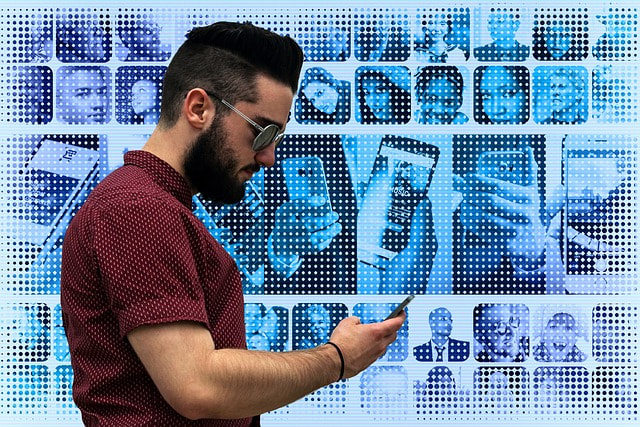
- In social media: It’s pretty common to create an idealized version of yourself on social media. We want to show our highlights and success and conceal challenges and struggles. This reminds me of a coworker whose friend was studying abroad in Europe, and his social media posts made it seem like he was having the time of his life. But when the two of them spoke on the phone, he revealed that he was extremely lonely and depressed in this new and unfamiliar situation.
- In Advertising: An example that comes to mind here is the use of words like “healthy” and “natural”. I’ve seen plenty of foods labeled as healthy, but the ingredient list tells me otherwise. And to be labeled “natural” a food can’t have anything artificial added. But this claim doesn’t mean it’s healthy or organic, and it may still be highly processed (Center for Food Safety and Applied Nutrition, n.d.)
- Fraud: In perhaps the most famous and largest Ponzi scheme ever, Bernie Madoff deceived nearly 40,000 people out of billions of dollars (Department of Justice, 2021).
Deception Research
Researchers distinguish between two types of deception research. The first is direct or active deception. This is where the participants are deliberately given false information about the nature, purpose, or procedures of the study. The second is indirect or passive deception. In this case, the participants agree to some deception. The researchers omit certain information or don’t disclose the study’s purpose. But, participants are told from the beginning that the study’s real purpose will be revealed after it’s completed (Boynton et al., 2013).
Direct Deception
A well-known and shocking example of direct deception in research is the Tuskegee Syphilis Study which was conducted from 1932 through 1972. The participants were not told the true purpose of the study which was to observe the progression of untreated syphilis. Most didn’t even know they had the disease and were told they were being treated for “bad blood”, a term used to describe various ailments. To make things even worse, after a cure was discovered (penicillin), researchers didn’t offer treatment to the participants because they wanted to continue the study.
Unethical and harmful studies like this led to the development of ethical guidelines and institutional review boards (IRBs). An IRB is a committee that reviews research proposals for ethical acceptability and compliance with an organization’s codes of conduct. IRBs help protect research participants and are mandatory at any U.S. institution receiving federal funds for research (APA, n.d.).
Indirect Deception
Indirect deception is thought to have few harmful effects (Boynton et al., 2013). A common example of indirect deception is used when testing new medications or treatments. Half of the study participants are given the experimental treatment and the other half are given a placebo. A placebo is an inactive substance that resembles the real thing but has no effect. At the end of the trial, the two groups are compared.
The reason for this approach is to ensure that reported effects are from the medication, and not caused by simply the belief that the treatment is doing something. (For example, if you think you’re taking something to relieve depression, you may convince yourself you’re feeling better.) But importantly, in this case, the participants are told ahead of time that they may get either the real drug or the placebo. Also, they are informed afterward which one they received and are thoroughly debriefed on the study’s purpose. If the study shows the drug was effective, the placebo group is also offered it.
Deception in Psychology
Not only is this type of experiment highly unethical and harmful to participants, but it can hurt science because people will be more suspicious and less likely to participate in future studies.
Ethical Guidelines
While the use of deception research is banned in some scientific disciplines, and some researchers believe it should be banned altogether (Boynton et al., 2013), it’s not uncommon in psychological research. As mentioned above, sometimes deception is necessary to obtain accurate or unbiased information. But today, studies must adhere to ethical guidelines and be evaluated by an institutional review board (IRB). These guidelines include:
- No other non-deceptive method exists to answer the research question
- The study makes a significant contribution to scientific knowledge
- The deception being used in the study will not cause emotional harm
- The deception will be revealed and explained to the participants as soon as possible
The researcher’s conduct is also crucial. One study indicated the professionalism of the researcher and the debriefing as key factors in removing psychological distress or harm to participants. Respecting the dignity of the participants makes a big difference (Boynton et al., 2013).

Tips on Identifying Deception
However, there are some things to look out for. While none of these indicates definitively that someone is being deceptive, they can provide a clue:
- Pupil dilation: When someone is lying, they are usually more nervous, which activates the sympathetic nervous system and causes pupils to dilate.
- Inconsistencies: Stories tend to sound less logical or implausible. Liars also sound more ambivalent and are more likely to repeat words and phrases.
- Response time in conversations: This is a tricky one. When someone is being deceitful, they often have longer hesitations before responding. This is due to the additional thought time required to make sure lies are consistent (De Paulo et al., 2003, Hartwig & Bond, 2011). However, when liars have time to plan, they answer more quickly. So one has to consider the situation (De Paulo et al., 2003).
- Content of the conversation: Liars tend to withhold information, offering fewer details. This could be due to guilt, or to help keep their stories straight (Adelson, 2004). Their stories also tend to seem less compelling and less forthcoming (DePaulo et al., 2003). This becomes more apparent in a “high stakes” deception as opposed to a “white lie”. So again, a lot depends on the context.
- Go with your intuition: Studies show that people are better at detecting deception when they go with their intuition rather than consciously looking for deceptive behaviors or signals. Distrust may even hamper the ability to detect deception. This is partly due to incorrect beliefs about what the signs of deceit actually are (Stel et al., 2020).
List of Deceptive Behaviors
In fact, studies show that people score no better than chance when trying to determine whether someone is lying or not. This even applies to people we think of as being good at detecting deception like police investigators, psychiatrists, and job recruiters. Some researchers even argue that there are no credible behavioral signs of deceit (Brennen & Magnussesn, 2020).
However, other researchers assert that there are behavioral clues. In addition, people that have been trained on what to look for can be up to 90% accurate. So, while none of these are true all the time and should be viewed cautiously, here are a few things to look for:
- Less fidgeting: While it makes sense to think we’d see more fidgeting when someone is lying due to nervousness, liars actually fidget less. Researchers believe this happens for two reasons. First, liars tend to be extra careful to avoid fidgeting so they don’t look nervous and make others suspicious. They’re consciously trying to look “natural”. The second reason is that it creates more “cognitive load” when someone is being deceptive. An activity has more cognitive load when it’s complex and requires more brain power. Keeping stories consistent and decerning whether others suspect anything takes extra thought and concentration, which takes energy away from unneeded movements (Vrij et al., 1996).
- Pressing lips: There is some evidence that liars press their lips together more than someone who is telling the truth (DePaulo et al., 2003). This can make their smile look forced or tense. Think of a “fake smile” versus a genuine smile.
- Vocal tone and cadence: Studies show people tend to speak in a higher pitch, faster, and louder when being deceitful. This may indicate fear or nervousness, or it may indicate excitement about getting away with something (DePaulo et al., 2003). However, this behavior is mostly seen when someone is particularly motivated to get away with the deception.
- Blink rate: The rate of eye blinking may increase or decrease. More blinking can indicate nervousness when lying, and less blinking can indicate the higher cognitive load required for maintaining the deception. However, the link between eye blinking and deception is weak and there’s disagreement among researchers. But taken with other indicators, it can be a clue.
Video: Detecting Deception
Quotes on Deception
- “I’m not upset that you lied to me, I’m upset that from now on I can’t believe you.” — Friedrich Nietzsche
- “The greatest deception men suffer is from their own opinions.” — Leonardo da Vinci
- “Tricks and treachery are the practice of fools that don’t have the brains enough to be honest.” — Benjamin Franklin
- “Just because something isn’t a lie does not mean that it isn’t deceptive. A liar knows that he is a liar, but one who speaks mere portions of truth in order to deceive is a craftsman of destruction.” — Criss Jami
- “Man is not what he thinks he is, he is what he hides.” ― André Malraux
- “Seldom, very seldom, does complete truth belong to any human disclosure; seldom can it happen that something is not a little disguised or a little mistaken.” ― Jane Austen, Emma
- “Someone who smiles too much with you can sometime frown too much with you at your back.” ― Michael Bassey Johnson
- “A lie that is half-truth is the darkest of all lies.” ― Alfred Tennyson

Articles Related to Deception
Books Related to Deception
Final Thoughts on Deception
But more often deception is harmful. It’s often used to cover up unethical or illegal behavior or to mislead others for personal gain. Most of us want to know if we’re being deceived, and many people claim to be experts at spotting liars. In reality, though, it’s extremely difficult to detect. Also, studies suggest that distrust actually decreases our ability to discern if someone is lying, So, it’s probably better to interact with others from a position of trust. Not only will this promote open and honest relationships, but approaching others with a trusting attitude fosters intuitive processing which is better for detecting deception.
Don’t Forget to Grab Our Free eBook to Learn How to
Grow Your Wellness Business Exponentially!
References
- Adelson, R. (2004). Psychological sleuths–detecting deception. Monitor on Psychology. https://www.apa.org/monitor/julaug04/detecting
- Brennen, T., & Magnussen, S. (2020). Research on non-verbal signs of lies and deceit: A blind alley. Frontiers in psychology, 11, 613410.
- Center for Food Safety and Applied Nutrition. (n.d.). Use of the term natural on food labeling. U.S. Food and Drug Administration. https://www.fda.gov/food/food-labeling-nutrition/use-term-natural-food-labeling
- Chance, Z., & Norton, M. I. (2015). The what and why of self-deception. Current Opinion in Psychology, 6, 104-107.
- Department of Justice. (2021, September 18). Justice Department announces additional distribution of more than $568 million to victims of Madoff Ponzi scheme. The United States Department of Justice. https://www.justice.gov/opa/pr/justice-department-announces-additional-distribution-more-568-million-victims-madoff-ponzi
- DePaulo, B. M., Lindsay, J. J., Malone, B. E., Muhlenbruck, L., Charlton, K., & Cooper, H. (2003). Cues to deception. Psychological bulletin, 129(1), 74.
- Hartwig, M., & Bond Jr, C. F. (2011). Why do lie-catchers fail? A lens model meta-analysis of human lie judgments. Psychological bulletin, 137(4), 643.
- Markowitz, D. M., Hancock, J. T., Woodworth, M. T., & Ely, M. (2023). Contextual considerations for deception production and detection in forensic interviews. Frontiers in Psychology, 14, 383.
- Stel, M., Schwarz, A., van Dijk, E., & van Knippenberg, A. (2020). The limits of conscious deception detection: when reliance on false deception cues contributes to inaccurate judgments. Frontiers in psychology, 11, 1331.
- Verigin, B. L., Meijer, E. H., Bogaard, G., & Vrij, A. (2019). Lie prevalence, lie characteristics and strategies of self-reported good liars. PloS one, 14(12), e0225566.
- Vrij, A., Semin, G. R., & Bull, R. (1996). Insight into behavior displayed during deception. Human Communication Research, 22(4), 544-562.
Are You a Therapist, Coach, or Wellness Entrepreneur?
Grab Our Free eBook to Learn How to Grow Your Wellness Business Fast!
