
Attachment Styles: Definition, Types, and Theory
Our attachment style is an important part of how we live our lives. Keep reading for more on what attachment styles are and where they come from.
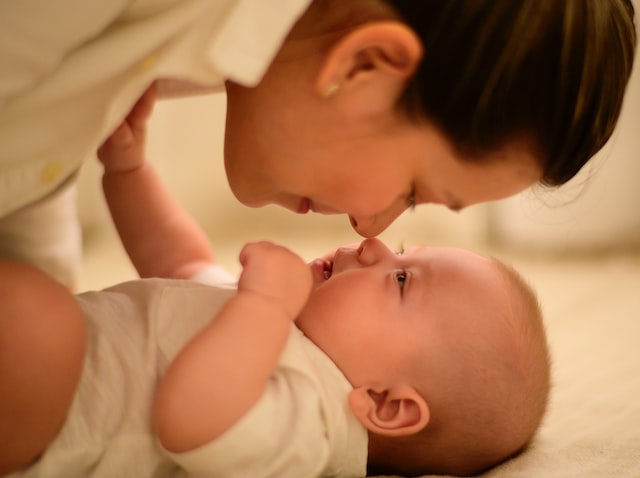
*This page may include affiliate links; that means we earn from qualifying purchases of products. |
Much of who we are today can be traced back to our childhood. As children, we begin to develop a sense of how the world works and who we are. Our personality, behavioral tendencies, self-image, and the way we connect with others are all influenced by our experiences as children. |
For example, as children, we are completely dependent on our parents for our survival. Our survival needs include food, water, and shelter as well as a sense of security and connection. When all of these needs are consistently met, we develop a model of the world in which people are safe and loving and we are worthy of that love. However, when our caregivers are unreliable and these needs go unmet, we develop a model of the world in which we are unsafe and unworthy of love and safety. It is these early childhood experiences that give rise to what is known as our attachment style. Let’s talk more about attachment styles and how we can better understand them.
Are You a Therapist, Coach, or Wellness Entrepreneur?
Grab Our Free eBook to Learn How to
Grow Your Wellness Business Exponentially!
✓ Save hundreds of hours of time ✓ Earn more $ faster
✓ Boost your credibility ✓ Deliver high-impact content
What Are Attachment Styles? (A Definition)
Why Are Attachment Styles Important?
Attachment styles are an important part of our daily lives. We can see reflections of our attachment styles in the way we engage with our romantic partners, who we choose as friends, and how we express ourselves. Understanding our attachment style can help us better understand ourselves and our behaviors. This knowledge can also show us what old wounds we might still need to heal.

Attachment Styles Theory
The way our caregiver treats us as babies and children teaches us what to expect from others. For example, when we have a caregiver that is emotionally available and consistently meets our need for connection and safety, we are taught that people are generally safe and dependable. The extent to which our needs are met in our youth also influences our self-concept as adults. For example, a consistently loving caregiver teaches us that we are worthy of love. These beliefs and expectations are the basis for our attachment style later in life.
John Bowlby’s Attachment Theory
The hypothesis is basically that children who are more comforted by their mother’s return are better able to think of their mother as a secure base because their mother has consistently provided a sense of security. However, babies who are less easily comforted by their mothers likely have experienced inconsistencies in whether or not she will provide them with a sense of security.
For more on this experiment, check out this video:
Video: Secure, Insecure, Avoidant Ambivalent Attachment in Mothers & Babies
- A mother and her baby play in an unfamiliar room for a few minutes.
- A stranger enters the room and sits next to the mother for a few minutes then engages in play with the baby.
- The mother leaves the room and the stranger tries to comfort the baby if it is distressed.
- After a few minutes, the stranger also leaves the room.
- The stranger then re-enters the room and tries to comfort the baby if it is distressed.
- Finally, the mother re-enters the room and the stranger leaves.
The babies’ response to each of these situations is measured and used to determine their attachment style. Using this experimental design, Ainsworth identified 3 attachment styles: Secure, ambivalent, and avoidant.
Babies who felt distressed when their mother left the room, were unable to be comforted by the stranger, and were soothed by their mother’s return were considered securely attached.
Babies who felt distressed when their mother left the room, were unable to be comforted by the stranger, and were not soothed by their mother’s return were considered to have an ambivalent attachment style.
Finally, babies who did not feel distressed when their mother left the room, happily played with the stranger, and were unaffected by their mother’s return were considered to have an avoidant attachment style.
If you want to watch how this experiment plays out, check out this video:
Video: The Strange Situation and Attachment
The Strange Situation experiment is still commonly used to study attachment styles today. Since the origin of the Strange Situation experiment, attachment theory has evolved and is now typically considered to include four styles. These include secure, anxious, avoidant, and disorganized. There are different schools of thought that define these categories in different ways, but we will stick with these four for this article.
How Parenting Contributes to Attachment Styles
It is thought that attachment styles are passed down through each generation (Fearon & Roisman, 2017). That is, the way our parents relate to us is likely influenced by the way their parents related to them and their parents before that, and so on.
Attachment Styles: Secure
A securely attached person might agree with statements like:
- I find it easy to be affectionate.
- I feel comfortable depending on others.
- I believe most people are essentially honest and dependable.
- It is important to me to honor agreements with my partner.
- I am good at keeping secrets and respecting boundaries.
- I am comfortable being affectionate with my partner.

Attachment Styles: Anxious
People with an anxious attachment style might agree with statements like:
- I think a lot about my relationships.
- I am very sensitive to my partner’s moods.
- I worry that I won’t measure up to other people.
- It is difficult for me to set realistic boundaries.
- I always second-guess myself.
- When I give more than I get, I often resent it and hold a grudge.
Attachment Styles: Avoidant
People with an avoidant attachment style might agree with statements like:
- I find it difficult to provide emotional support.
- I value my independence more than relationships.
- I find it difficult to depend on others.
- I sometimes minimize the importance of my close relationships.
- I tend to prefer relationships with animals over people.
- I have difficulty reaching out and asking for help.
Attachment Styles: Disorganized
A disorganized attachment style is thought to develop when an infant experiences their primary caregiver as a source of fear. This creates a conflict because the baby’s source of safety is also the source of their fear (Granqvist et al., 2017). As an adult, a disorganized attachment style can manifest as erratic and conflicting feelings and behaviors, difficulty with emotional regulation and anxiety.
Someone with a disorganized attachment style might agree with statements like:
- I struggle to feel safe with my partner.
- I often disconnect, dissociate, and get confused.
- I have a hard time remembering my previous relationships.
- I often feel like problems have no resolution.
- I tend to expect the worst to happen.
- I want closeness but am also afraid of getting close to someone.
Can Attachment Styles Change?
However, someone with an anxious perspective might see the same situation as alarming and a possible indicator that their relationship is shaky. It is certainly not a simple process to change this kind of perspective; we can’t just wake up one day and decide we aren’t anxious anymore (though that would be awesome). However, our model of the world – our perspectives – can be changed over time with sufficient conscious effort and dedication.
The process of changing attachment styles essentially involves unlearning many of the messages that we internalized as children and replacing those thoughts and behaviors with something more appropriate and adaptive. This can be a challenging and lengthy process, and it often involves exploring past experiences and emotions that may have been repressed or avoided. However, research has shown that psychotherapy is an effective way to change your attachment style (Travis et al., 2001).
Attachment Styles Quiz

Articles Related to Attachment Styles
Books Related to Attachment Styles
Final Thoughts on Attachment Styles
Attachment styles are an important part of our lives, from childhood to adulthood. They are how we view the world and relate to others. Learning more about our attachment style can help us better understand ourselves and our relationships with other people. For more on attachment styles check out this video from Psyc2Go:
Video: The Four Attachment Styles of Love
Don’t Forget to Grab Our Free eBook to Learn How to
Grow Your Wellness Business Exponentially!
References
- Ainsworth, M. D. S. (1989). Attachments beyond infancy. American Psychologist, 44, 709–716.
- Bowlby, J., & Ainsworth, M. (2013). The origins of attachment theory. Attachment theory: Social, developmental, and clinical perspectives, 45(28), 759-775
- Fearon, R. P., & Roisman, G. I. (2017). Attachment theory: progress and future directions. Current Opinion in Psychology, 15, 131-136.
- Levy, K. N., Ellison, W. D., Scott, L. N., & Bernecker, S. L. (2011). Attachment style. Journal of clinical psychology, 67(2), 193-203.
- Granqvist, P., Sroufe, L. A., Dozier, M., Hesse, E., Steele, M., van Ijzendoorn, M., … & Duschinsky, R. (2017). Disorganized attachment in infancy: A review of the phenomenon and its implications for clinicians and policy-makers. Attachment & human development, 19(6), 534-558.
- Travis, L. A., Bliwise, N. G., Binder, J. L., & Horne-Moyer, H. L. (2001). Changes in clients’ attachment styles over the course of time-limited dynamic psychotherapy. Psychotherapy: Theory, Research, Practice, Training, 38(2), 149.
- Whitfield, C. L. (1993). Boundaries and relationships: Knowing, protecting and enjoying the self. Health Communications, Inc.
Are You a Therapist, Coach, or Wellness Entrepreneur?
Grab Our Free eBook to Learn How to Grow Your Wellness Business Fast!
