
Authoritarian Parenting: Definition, Examples, & Effects
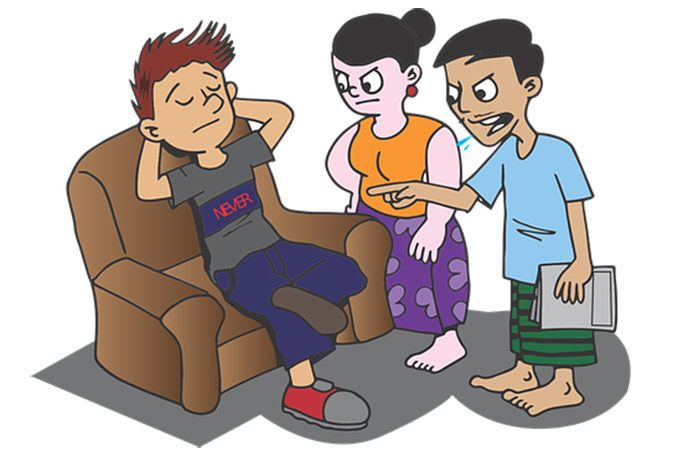
Authoritarian parenting is a strict, harsh, and overbearing style of parenting, known among psychologists for its associations with worse outcomes for children.
*This page may include affiliate links; that means we earn from qualifying purchases of products. |
When I was growing up, I spent more time around other kids’ mothers than I did around their fathers. When I did see fathers in action, it was usually at sporting events, such as baseball games and basketball practices, where my peers and I were intensely focused on demonstrating our athletic skills. And our fathers—well, what the fathers did looked pretty different from one father to another. |
I remember one father in particular whose son, a teammate of mine we can call Tom, was a talented athlete but cowered under his father’s authority. Tom’s father would loudly chastise and critique his son; he never hit Tom in front of others, but he would sometimes stalk off to the parking lot, almost dragging his son by the arm. For most of us boys, his energy was scary, and we stayed away. And as Tom grew up, becoming more of a bully but also more isolated, we tended to stay away from him too.
Mothers can be this way too—anybody can be an authoritarian parent. How do parents get this way, and what does it mean for their children? Psychologists know a lot about parenting styles, so let’s look under the hood of the style of parenting known as authoritarian parenting.
Are You a Therapist, Coach, or Wellness Entrepreneur?
Grab Our Free eBook to Learn How to
Grow Your Wellness Business Exponentially!
✓ Save hundreds of hours of time ✓ Earn more $ faster
✓ Boost your credibility ✓ Deliver high-impact content
What Is Authoritarian Parenting? (A Definition)
From the start, this line of research suggested that authoritative parenting—combining the provision of warmth and structure—was most advantageous, at least for children in the White, American samples Baumrind (1971) studied. By contrast, children with authoritarian parents seemed to do less well in their interpersonal relationships, school activities, and overall well-being.
Why might this be? First of all, authoritarian parenting is all about following rules, even if the rules themselves don’t make sense or don’t seem to benefit the children (Baumrind, 1971). For this reason, authoritarian parents seem more likely to use punishment than parents with other parenting styles. Where authoritative parents are as likely to use warmth and collaboration as to strictly enforce rules, authoritarian parents push for absolute conformity to their rules—minimal negotiation is allowed or tolerated.
This reminds me of my teammate Tom and his father, of course. The few protests Tom made against his father’s expectations fell on deaf ears or even earned him more criticism (“You can make demands like that when you stop striking out all the time!”). It seemed as though father and son lived in a world where only athletic success was acceptable, while anything less was a violation of the rules and a cause for anger and scorn. Although I often wished my own father would show more passion for the game and investment in my performance, I certainly was glad it did not resemble the parenting Tom had to experience.

Opposite of Authoritarian Parenting
What does permissive parenting look like? These parents are very kind to their children—they are high on the warmth dimension of parenting—but they are uninvolved otherwise in their children’s lives. Instead of trying to control their children’s behaviors, these parents leave their children to regulate themselves and establish their own self-discipline.
When I think back on my own childhood, I recognize that my parents tended in the permissive direction. Although they once in a while got firm and laid down the law, most of the time they were warm but hands-off. This worked well enough for me, as their first-born child, because I was naturally very eager to please and gifted with some innate self-regulation abilities. But some of my younger siblings might have needed more support and accountability than they received; my parents were more likely to be there for them after they had made a mistake than to stop them from making the mistake in the first place.
Since Baumrind’s original research, many scholars have considered whether there might be yet more parenting styles, and a lot of research has considered how these parenting styles are related to outcomes for children. For more details on parenting styles in general, including authoritarian parenting, you might watch this video:
Video: 5 Parenting Styles and Their Effects on Life
Authoritarian Parenting Pros & Cons
The picture is more complex for other populations, however. Where authoritarian parenting among White samples is understood as being dominantly strict and aggressive toward one’s children, this level of control may be more adaptive for children of other races and backgrounds. For example, a high level of parental control is often understood differently among Asian American families and may be associated with better outcomes for the children in those families (Ang & Goh, 2006). In fact, plenty of research suggests that there are aspects of authoritarian parenting that are positive for both Asian American and African American families. Even more interestingly, a more authoritative style, which is usually associated with better outcomes for European American children, seems less beneficial to Asian American children than the stricter authoritarian style (Chao, 2001).
Why might this be? Unsurprisingly, children of different ethnicities and races are being raised in different cultural and economic realities. For example, African American children may be protected from the negative effects of exposure to community violence by parents who are authoritarian (Valentino et al., 2012). In this specific environment, stronger parental control may be more adaptive and helpful.
Causes of Authoritarian Parenting
There is some evidence that parents who engage in authoritarian parenting may also just be more predisposed to being angry in general (Pidgeon & Sanders, 2009), which could lead them to react more strongly to children’s negative behaviors.
Yet another line of research suggests that parents may try to control their children when they feel they are of low social status or when they lack resources. One study, looking at decades of data on American families, found that parents that were more economically disadvantaged, as well as families that perceived themselves as having lower social status, were more likely to engage in authoritarian parenting (Schneider & Schenck-Fontane, 2022). These parents may lack the time and resources that make it easier to invest in their children with gentleness and care; it may simply be easier to parent harshly and with great control if one is already very stressed out by the world.
Examples of Authoritarian Parenting
Along these lines, authoritarian parents also use high rates of coercive parenting strategies (Baumrind et al., 2010). They use more verbal aggression with their children and more psychological control tactics, such as inducing guilt in their children so the children will obey, or threatening to withhold their love if the child is not more compliant.
At the same time, some authoritarian parenting can include potentially positive forms of intense control, such as when a parent keeps a child on task to complete an important school project the night before it is due. However, this kind of intense support might also be accompanied by negative statements or expressions of emotion that make the child feel bad about the situation.

Authoritarian Parenting Effects on Mental Health
I think these findings make a lot of sense. Children who continually receive the message that they cannot do things right on their own, and who are coerced or forced into accepting help and being controlled, will have a hard time seeing themselves as good and competent people.
Authoritarian Parenting Effects on Children
As should be clear by now, authoritarian parenting seems to result in negative outcomes for many children across a wide range of life domains, from academic performance to social interactions to mental health (Baumrind, 1991; Russell et al., 2003). These results seem to be consistent across social classes and countries, at least for people of European descent (Thompson et al., 2003).
Authoritarian Parenting Research
It also seems that authoritarian parenting may be reproduced across generations. Chronically stressed out families may feature more distressed parents, whose authoritarian responses to that stress create distressed children, who in turn end up being authoritarian parents themselves (Shaw & Starr, 2019). Although these patterns may be changing over time—it looks like in many countries, rates of authoritarian parenting are decreasing (Trifan et al., 2014)—it is likely that families locked in this pattern may continue to function this way. If you have ever wondered why people end up parenting as harshly as their parents did despite their intentions not to do so, it may be because of this: Being maltreated as a child by strict and harsh parents seems to make it harder to regulate yourself while parenting as an adult (Rodriguez, 2010).

Articles Related to Authoritarian Parenting
Books Related to Authoritarian Parenting
Final Thoughts on Authoritarian Parenting
I think it is pretty encouraging news that authoritarian parenting practices, especially physical punishment, are decreasing with time (Trifan et al., 2014). At least in Western cultures, which place a high premium on developing a sense of independence and learning to regulate oneself without outside support, authoritarian parenting seems to undermine the very skills needed to survive and thrive.
If you find yourself engaging in authoritarian parenting, it is probably for some reasons that you can change, or at least investigate. Learning about more adaptive and effective parenting styles may give you a greater sense of competence—and more satisfaction—as a parent.
Don’t Forget to Grab Our Free eBook to Learn How to
Grow Your Wellness Business Exponentially!
References
- Ang, R. P., & Goh, D. H. (2006). Authoritarian parenting style in Asian societies: A cluster-analytic investigation. Contemporary Family Therapy, 28, 131–151.
- Baumrind, D. (1971). Current patterns of parental authority. Developmental Psychology Monograph, 4, 1–103.
- Baumrind, D. (1991). The influence of parenting style on adolescent competence and substance use. Journal of Early Adolescence, 11(1), 56–95.
- Baumrind, D., Larzelere, R. E., & Owens, E. B. (2010). Effects of preschool parents’ power assertive patterns and practices on adolescent development. Parenting: Science and Practice, 10(3), 157–201.
- Chao, R. K. (2001). Extending research on the consequences of parenting style for Chinese Americans and European Americans. Child Development, 72(6), 1832–1843.
- Crouch, J. L., Irwin, L. M., Milner, J. S., Skowronski, J. J., Rutledge, E., & Davila, A. L. (2017). Do hostile attributions and negative affect explain the association between authoritarian beliefs and harsh parenting? Child Abuse & Neglect, 67, 13–21.
- Georgiou, S. N., Fousiani, K., Michaelides, M., & Stavrinides, P. (2013). Cultural value orientation and authoritarian parenting as parameters of bullying and victimization at school. International Journal of Psychology, 48(1), 69–78.
- Hoeve, M., Blokland, A., Dubas, J. S., Loeber, R., Gerris, J. R., & Van der Laan, P. H. (2008). Trajectories of delinquency and parenting styles. Journal of Abnormal Child Psychology, 36, 223–235.
- King, K. A., Vidourek, R. A., & Merianos, A. L. (2016). Authoritarian parenting and youth depression: Results from a national study. Journal of Prevention & Intervention in the Community, 44(2), 130–139.
- Mulvaney, M. K., & Morrissey, R. A. (2012). Parenting beliefs and academic achievement across African-American and Caucasian family contexts. Early Child Development and Care, 182(9), 1105–1124.
- Pidgeon, A. M., & Sanders, M. R. (2009). Attributions, parental anger and risk of maltreatment. International Journal of Child Health and Human Development, 2, 57–69.
- Rodriguez, C. M. (2010). Parent–child aggression: Association with child abuse potential and parenting styles. Violence and Victims, 25(6), 728–741.
- Russell, A., Hart, C. H., Robinson, C. C., & Olsen, S. F. (2003). Children’s sociable and aggressive behaviour with peers: A comparison of the US and Australia and contributions of temperament and parenting styles. International Journal of Behavioral Development, 27(1), 74–86.
- Schneider, W., & Schenck-Fontaine, A. (2022). Growing up unequal: Objective and subjective economic disparities and authoritarian parenting. Child Abuse & Neglect, 130, 105332.
- Shaw, Z. A., & Starr, L. R. (2019). Intergenerational transmission of emotion dysregulation: The role of authoritarian parenting style and family chronic stress. Journal of Child and Family Studies, 28, 3508–3518.
- Thompson, A., Hollis, C., & Richards, D. (2003). Authoritarian parenting attitudes as a risk for conduct problems: Results from a British national cohort study. European Child & Adolescent Psychiatry, 12, 84–91.
- Timpano, K. R., Keough, M. E., Mahaffey, B., Schmidt, N. B., & Abramowitz, J. (2010). Parenting and obsessive compulsive symptoms: Implications of authoritarian parenting. Journal of Cognitive Psychotherapy, 24(3), 151–164.
- Trifan, T. A., Stattin, H., & Tilton‐Weaver, L. (2014). Have authoritarian parenting practices and roles changed in the last 50 years? Journal of Marriage and Family, 76(4), 744–761.
- Valentino, K., Nuttall, A. K., Comas, M., Borkowski, J. G., & Akai, C. E. (2012). Intergenerational continuity of child abuse among adolescent mothers: Authoritarian parenting, community violence, and race. Child Maltreatment, 17(2), 172–181.
Are You a Therapist, Coach, or Wellness Entrepreneur?
Grab Our Free eBook to Learn How to Grow Your Wellness Business Fast!
