
Enmeshment: Definition, Family Systems, & Psychology
Where do I end and you begin? If this is a question you find yourself asking, you might be in an enmeshed relationship.
*This page may include affiliate links; that means we earn from qualifying purchases of products. |
Maintaining close relationships with the people in our lives is a wonderful (and important) part of human existence. However, it is possible to be too close. This kind of closeness is called enmeshment.
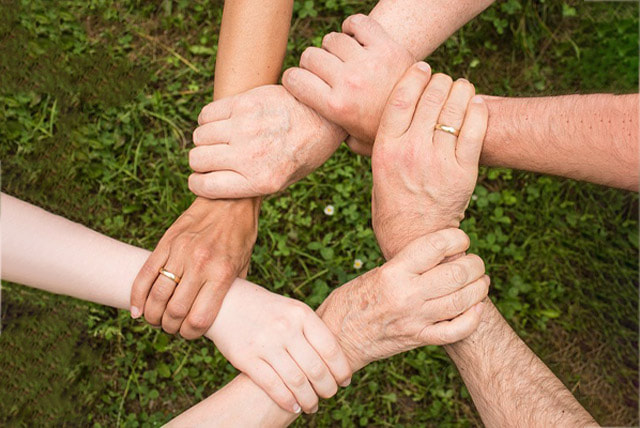
Enmeshment is a system of relating to family, partners, and friends in which the extent of your closeness causes your identity to dissolve into theirs. |
Pathologically close relationships, though they may sometimes feel comfortable, are associated with decreases in well-being (Szcześniak & Tułecka, 2020) and thus are important to address.
Are You a Therapist, Coach, or Wellness Entrepreneur?
Grab Our Free eBook to Learn How to
Grow Your Wellness Business Exponentially!
✓ Save hundreds of hours of time ✓ Earn more $ faster
✓ Boost your credibility ✓ Deliver high-impact content
What Is Enmeshment? (A Definition)
Psychology of Enmeshment
Enmeshment was conceptualized as one end of a boundary intensity continuum. At the other end of this continuum is disengagement. Enmeshment describes an extreme lack of boundaries while disengagement describes boundaries that are extremely rigid (Minuchin, 1974).

Enmeshment in Family Systems
A few key principles and concepts of family systems theory include:
Interconnectedness
Family systems theory is particularly concerned with the interconnectedness of families and the subsystems within those families. Much like other systems, each component piece influences the function of the whole. In other words, family members are seen as interconnected, and changes in one member’s behavior or emotional state are understood to have ripple effects throughout the family system (Watson, 2012).
Feedback Loops
The effects one family member can have on another often cause feedback loops (Watson, 2012). Feedback loops, in the context of a family, can be conceptualized like this: Changes in family member A cause changes in family member B, which in turn cause changes in family member A, and so on. For example, imagine a parent who comes home in a bad mood after a hard day at work. Because they are in a bad mood, they are curt and disengaged from their child. This causes the child to feel upset by their parent’s behavior and act out, which prolongs the negative mood of the parent.
Organization and Family Roles
According to family systems theory, families are organized into subsystems. For example, the relationship between parents is one subsystem, the relationship between parent and child is another, and the relationship between siblings is a third (Bacon & Conway, 2022). Each subsystem is thought to carry a set of boundaries and rules that help define the role each family member plays within each subsystem. For example, the role of a big brother in the sibling subsystem is very different from the role he plays in the parent-child subsystem.
In the context of family systems theory, enmeshment describes a dysfunctional family dynamic characterized by blurred or weak boundaries between individual family members (Bacon & Conway, 2022). In enmeshed families, personal boundaries are poorly defined, and there is often an excessive emotional involvement and overdependency among family members.
Here are some key characteristics and consequences of enmeshment:
Lack of Individuality
Enmeshed family members may struggle to develop and maintain a sense of individuality. They may have difficulty distinguishing their own thoughts, feelings, and identities from those of other family members. This can result in a lack of autonomy and personal identity.
Emotional Overinvolvement
Enmeshed families tend to be emotionally intense and overly involved in each other’s lives. Family members may feel responsible for each other’s emotions and well-being, leading to a high level of emotional reactivity and dependency.
Poor Boundaries
As previously mentioned, boundaries between family members are often poorly defined or nonexistent in enmeshed families. This can manifest as intrusive behavior, a lack of privacy, and an inability to maintain healthy emotional distance.
Role Confusion
In part a consequence of poor boundaries, enmeshment can lead to role confusion within the family. That is, family members may take on roles that are not age-appropriate or appropriate to their individual personalities and needs. For example, a child may be expected to fulfill a parental role or provide emotional support to a parent.
Limited Conflict Resolution
Communication is one of the primary struggles of an enmeshed family (Kog et al., 1985). This difficulty with communication means that enmeshed families often struggle to effectively resolve conflicts. This is because conflicts can trigger intense emotional reactions and anxiety, making it difficult for family members to address issues directly and constructively.
Emotional Manipulation
The emotional connection between family members in an enmeshed family is, by definition, intense. This powerful emotional connection can be used as a tool for manipulation or control (Williams & Hiebert, 2001). Family members may use guilt, emotional blackmail, or other tactics to keep others emotionally close and maintain the status quo.
Enmeshment and Family
The concept of enmeshment was originally developed to understand the etiology of dysfunction in some families (Minuchin, 1974). Enmeshment as it relates specifically to family is defined as “family patterns that facilitate psychological and emotional fusion among family members” (Barber & Buehler, 1996). Enmeshment in a family can potentially interfere with a child’s individuation process and inhibit normal development of psychosocial maturity (Barber & Buehler, 1996). In other words, enmeshment limits the opportunities for a child to develop an identity as an individual separate from the family and inhibits any kind of autonomy or agency a child could have.
Enmeshment and Trauma
In addition to the psychological harm being in an enmeshed relationship can cause, growing up in an enmeshed family can also be a risk factor for developing posttraumatic stress disorder (PTSD) after experiencing a traumatic event (Karatzias et al., 2016). It is possible that it is the dysfunctional model of ourselves and the world that contributes to this relationship.
Early in childhood we develop a system for understanding the world known as a schema. If we grow up in an enmeshed family, we are likely to develop a maladaptive schema. That is, we internalize the lack of autonomy and individuality and base our models of the world on this internalization. We then rely on the schemas we developed as children to help us cope with traumatic experiences. For example, if we developed a schema in which we see ourselves as capable and resilient, we might be better able to heal and grow in response to adverse events. On the other hand, if we grew up in an enmeshed family and developed a schema in which we are fragile and vulnerable, we do not have the necessary cognitive tools to help us cope and thus are more likely to develop PTSD (Price, 2007).
Enmeshment and Boundaries
Boundaries can be defined as the limits and expectations we set with others that help us feel safe and whole (Tawwab, 2021). For example, imagine you have a friend that consistently calls you late at night just to chat, which disrupts your sleep—something that is important to you. If you tell your friend that calling so late is not acceptable behavior because it infringes on something you value, you’ve set a boundary.
Boundaries are an important part of our identity and sense of autonomy (Tawwab, 2021). They help us distinguish between ourselves and others. In an enmeshed relationship, our boundaries are porous and our sense of self is compromised.

Enmeshment in Romantic Relationships
The consequences of an enmeshed romantic relationship are similar to those of an enmeshed family but may manifest slightly differently. Here are a few examples of how enmeshment affects individuals in a romantic partnership.
Loss of Individual Identity
Enmeshed couples may struggle to maintain a clear sense of their individual identities. They might become so wrapped up in the relationship that they lose touch with their own interests, personal goals, and boundaries.
Constant Togetherness
Enmeshed couples often spend an excessive amount of time together. They may have difficulty being apart and feel anxious or distressed when separated, even for short periods.
Emotional Dependency
One or both partners in an enmeshed relationship may become emotionally dependent on the other. They may rely on their partner to meet all their emotional needs and may have difficulty coping with stress or emotional challenges independently.
Lack of Autonomy
Enmeshed couples may struggle to make decisions independently. They might consult each other on even minor decisions, feeling unable to take action without the other’s input.
Shared Identity
Partners in an enmeshed relationship may develop a shared identity to the point where they refer to themselves as “we” rather than “I” or “you.” This can indicate a merging of individual identities into a single unit.
Conflict Avoidance
Enmeshed couples may avoid conflict at all costs, fearing that disagreements could threaten the stability of the relationship. As a result, important issues may go unaddressed, leading to simmering resentment.
Emotional Intensity
Enmeshed relationships are often marked by intense emotional interactions. Partners may have difficulty regulating their emotions and may experience extreme highs and lows within the relationship.
Difficulty Ending the Relationship
Enmeshed couples may find it incredibly challenging to end the relationship, even if it has become unhealthy or toxic. The fear of losing their sense of identity and the emotional support they get from the relationship can make it difficult to break free.
Overcoming Enmeshment
For example, many people who experience enmeshed relationships feel that they are incapable of functioning independently. Challenging this idea by acting autonomously and proving to themselves that they are in fact capable of making appropriate decisions on their own helps to dismantle the belief system that constrains them to enmeshed relationships.
Managing guilt is also an important process in overcoming enmeshment (Williams & Hiebert, 2001). In enmeshed relationships—particularly relationships between a parent and child—guilt is commonly used as a tool of control and can make changing the structure of the relationship feel like a betrayal or an abandonment.

Articles Related to Enmeshment
Books Related to Enmeshment
Final Thoughts on Enmeshment
Enmeshment refers to a pathological closeness in which boundaries are porous and the distinction between self and other is blurred. This is a phenomenon that largely occurs in family systems. However, it is not uncommon for people who grew up in an enmeshed family to replicate that style of relating in other relationships such as romantic relationships and friendships. To learn more about enmeshment, check out this video:
Video: Enmeshment: The Problem of Too Much Togetherness in Dysfunctional Families
Don’t Forget to Grab Our Free eBook to Learn How to
Grow Your Wellness Business Exponentially!
References
- Bacon, I., & Conway, J. (2022). Co-dependency and Enmeshment—a Fusion of Concepts. International Journal of Mental Health and Addiction, 1–10.
- Barber, B. K., & Buehler, C. (1996). Family cohesion and enmeshment: Different constructs, different effects. Journal of Marriage and the Family, 433–441.
- Frost, D. M., & Forrester, C. (2013). Closeness discrepancies in romantic relationships: Implications for relational well-being, stability, and mental health. Personality and Social Psychology Bulletin, 39(4), 456–469.
- Gibson, T. (2020). Attachment theory: A guide to strengthening the relationships in your life. Rockridge Press.
- Karatzias, T., Jowett, S., Begley, A., & Deas, S. (2016). Early maladaptive schemas in adult survivors of interpersonal trauma: foundations for a cognitive theory of psychopathology. European Journal of Psychotraumatology, 7(1), 30713.
- Kog, E., Vandereycken, W., & Vertommen, H. (1985). The psychosomatic family model. A critical analysis of family interaction concepts. Journal of Family Therapy, 7(1), 31–44.
- Minuchin, S. (1974). Families and family therapy. Harvard University Press.
- Minuchin, S., Baker, L., Rosman, B. L., Liebman, R., Milman, L., & Todd, T. C. (1975). A conceptual model of psychosomatic illness in children: Family organization and family therapy. Archives of General Psychiatry, 32(8), 1031–1038.
- Price, J. P. (2007). Cognitive schemas, defence mechanisms and post-traumatic stress symptomatology. Psychology and Psychotherapy: Theory, Research and Practice, 80(3), 343–353.
- Szcześniak, M., & Tułecka, M. (2020). Family functioning and life satisfaction: The mediatory role of emotional intelligence. Psychology Research and Behavior Management, 223–232.
- Tawwab, N. G. (2021). Set boundaries, find peace: A guide to reclaiming yourself. Penguin.
- Watson, W. H. (2012). Family systems.
- Williams, L. M., & Hiebert, W. J. (2001). Challenging the belief system behind enmeshment. Journal of Clinical Activities, Assignments & Handouts in Psychotherapy Practice, 1(2), 17–28.
Are You a Therapist, Coach, or Wellness Entrepreneur?
Grab Our Free eBook to Learn How to Grow Your Wellness Business Fast!
