
Phineas Gage: History, Facts, & Importance in Psychology
Phineas Gage is a legend in the history of brain science. Keep reading to find out why.
*This page may include affiliate links; that means we earn from qualifying purchases of products. |
If you’ve ever taken a psychology class, you have almost certainly heard of a man called Phineas Gage. In the mid-19th century, Gage was by all accounts a regular person. He cared for his family, was well liked by his friends, and was a skilled railroad construction foreman. His legacy stems from a traumatic brain injury he sustained as a result of a work-related accident. |
Are You a Therapist, Coach, or Wellness Entrepreneur?
Grab Our Free eBook to Learn How to
Grow Your Wellness Business Exponentially!
✓ Save hundreds of hours of time ✓ Earn more $ faster
✓ Boost your credibility ✓ Deliver high-impact content
Who Is Phineas Gage? (An Introduction)
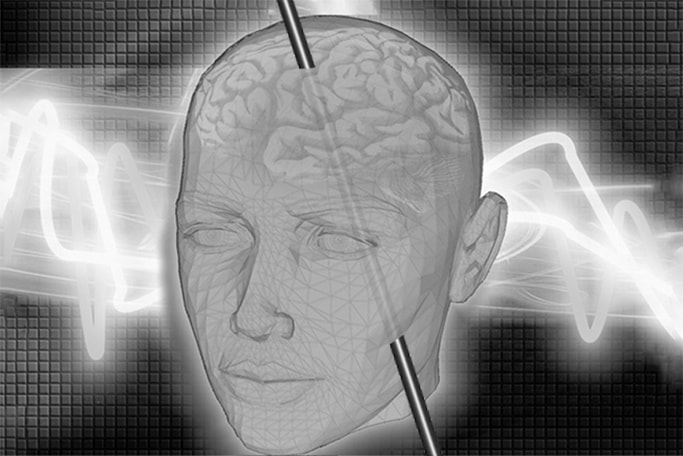
Engaged in the hazardous task of preparing a blasting hole for railroad construction, Gage inadvertently set in motion a disastrous chain of events. While tamping down blasting powder into the drilled hole, the iron rod he was using struck a spark, igniting the powder and resulting in a sudden, violent explosion. The explosion sent the tamping iron rocketing out of the hole at high velocity. The tamping iron, which measured about 3 feet 7 inches (approximately 1.1 meters) in length and weighed around 13.25 pounds (about 6 kilograms), struck Gage in the face, entered his skull through his left cheek, and passed diagonally through his brain before exiting from the top of his head and landing 20-25 yards behind him (Macmillan, 2008).
Not only did Gage survive the ordeal, but it is said that he never even lost consciousness. Some accounts suggest that he was walking and talking shortly after the blast and that he sat upright in the oxcart during the mile-long journey back to Cavendish, where he would receive medical attention (Kean, 2014).
The story of Phineas Gage is not only one of survival but also a pivotal chapter in the understanding of brain function. His journey, marked by resilience and transformation, continues to captivate researchers, medical professionals, and enthusiasts alike.
Why Is Phineas Gage Important in Psychology?
The damage incurred by Phineas Gage and the immediate changes in his personality following the accident provided some of the earliest evidence demonstrating that the frontal lobes play an important role in human behavior.
Phineas Gage’s case also pointed toward localization of brain function. That is, the symptoms he experienced following the accident suggested that the damaged area was responsible for the functions he now lacked. This observation became the basis for the idea that different areas of the brain were specialized to perform different functions.

Phineas Gage and Frontal Lobe Function
Monument to Phineas Gage
The site where the Phineas Gage accident occurred in Cavendish, Vermont, is marked by a commemorative plaque. This marker was erected on September 13th, 1998, the 150th anniversary of Phineas Gage’s accident.
Phineas Gage’s History
Not much is known about the history of Phineas Gage beyond his remarkable survival of the accident and the subsequent symptoms he experienced (Macmillan & Lena, 2010). Prior to the accident, it is said that Phineas was quiet and well liked among his coworkers. He was reportedly energetic, shrewd, and intelligent, and he performed well in his occupation (Macmillan & Lena, 2010). Sometime after the accident, Phineas moved to Chile for several years, where he worked as a stagecoach driver. Around 1859, Phineas left South America and returned to the United States. According to statements made by his mother to his attending physician, Dr. John Harlow, Phineas was in poor health when he returned. In 1860, Phineas died, likely as the result of a seizure.
How Did Phineas Gage Survive?
These four factors are:
Gage’s robust health: Gage was described as a strong and healthy individual prior to the accident. His general physical condition may have contributed to his ability to withstand the traumatic injury and subsequent recovery.
The shape of the tamping iron: Because it was the pointed end of the tamping iron that entered Gage’s skull, it did not leave any kind of prolonged compression of bone and tissue or result in a concussion.
The injury itself, which facilitated recovery from infection: The entry wound left behind by the tamping iron created an opening that allowed any byproducts of infection to drain out. Harlow suggested that without the ability to drain the wound, recovery would likely have been impossible.
Location of the injury: While the iron rod passed through Gage’s skull and brain, it primarily damaged the frontal lobes of his brain. Although the injury was severe, it didn’t affect critical structures responsible for vital functions like breathing and heart rate, which are located in the brainstem. This allowed Gage to survive the immediate trauma.
In addition to the four facilitating factors laid out by Harlow, scholars today note a few additional factors that contributed to Gage’s recovery (Macmillan, 2008).
Rapid emergency medical care: Gage received medical attention relatively quickly after the accident. Dr. Harlow, the physician who treated him, provided immediate care, cleaning the wound and assisting with Gage’s recovery.
Infection control: Proper wound care and cleanliness helped reduce the risk of life-threatening infections that could have developed from the injury.
Adaptive brain function: The human brain is highly adaptive and capable of reorganizing its functions after damage. While Gage’s personality and behavior changed significantly due to the frontal lobe injury, his brain likely compensated for some of the lost functions over time, allowing him to function more as a typical member of society.
Life as a coach driver: A few years after the accident, Gage began working as a coach driver in Chile. It is suggested that the structure provided by the daily tasks his job required played a major role in his recovery. Frontal lobe damage often results in distractibility and trouble planning and completing tasks, which can create issues in gaining and maintaining employment. However, Gage’s job as a coach driver in Chile provided a structured and consistent daily routine, meaning he never needed to make a plan, and once he started driving he had to keep going until it was time to turn around. This allowed Gage to function more normally in society than he may otherwise have been able to.

Phineas Gage’s Symptoms
Though Gage’s symptoms were undoubtedly severe, some scholars suggest that accounts of the consequences of his brain injury may be inaccurate or exaggerated (Schleim, 2022) and that he may have recovered even more than is commonly believed (Macmillan & Lena, 2010). Part of the argument that Gage’s symptoms were not permanent is supported by his employment history following the accident. Specifically, Macmillan & Lena (2010) note that Gage was employed as a coach driver for several years in Chile—a position that would have required complex cognitive-motor and social skills. Furthermore, given what we now know about the ability of the brain to adapt to damage and recover lost functions—known as neuroplasticity—this is a likely possibility.
Facts About Phineas Gage
- Phineas P. Gage was born in 1823 in Lebanon, New Hampshire, USA.
- He worked as a railroad construction foreman in the 19th century.
- On September 13, 1848, Gage was involved in a workplace accident while tamping blasting powder during railroad construction.
- The tamping rod accidentally ignited the powder, propelling the rod through his skull and brain.
- Remarkably, Gage survived the accident, even though the iron rod passed through his frontal lobes.
- He was conscious and able to speak shortly after the incident.
- His recovery was largely attributable to the skill and care of his attending physician, Dr. John Harlow. The meticulous records Dr. Harlow kept have been a vital component of our current understanding of the life and death of Phineas Gage.
- Despite his changed personality, Gage continued to work after the accident and traveled to various places, including Chile and California.
- Phineas Gage died on May 21, 1860, at the age of 36 in San Francisco, California.
- He survived for almost 12 years after the accident.
- His cause of death was likely related to a series of seizures.
- Gage’s skull and the tamping iron that caused the injury are on display at the Warren Anatomical Museum at Harvard Medical School.
- Phineas Gage’s case is considered one of the earliest documented examples illustrating the connection between brain damage, particularly in the frontal lobes, and changes in personality and behavior.

Articles Related to Phineas Gage
Books Related to Phineas Gage
Final Thoughts on Phineas Gage
Phineas Gage was a relatively typical 25-year-old man from the northeastern United States before his life was forever changed by a catastrophic accident. Perhaps due to a simple moment of inattention, Gage inadvertently caused a premature explosion that launched a 13-pound tamping iron through his head. His remarkable recovery and the subsequent changes in his personality provided some of the first evidence of localization of brain function and illuminated some of the functions of the frontal lobe, making him a legend in the study of brain structure and function. To learn more about Phineas Gage, check out this video:
Video: What Really Happened to Phineas Gage?
Don’t Forget to Grab Our Free eBook to Learn How to
Grow Your Wellness Business Exponentially!
References
- Kean, S. (2014). Phineas Gage, neuroscience’s most famous patient. Science, 11, 32.
- Macmillan, M. (2008). Phineas Gage – Unravelling the myth. Psychologist, 21(9), 828–831.
- Macmillan, M., and Lena, M. L. (2010). Rehabilitating Phineas Gage. Neuropsychological Rehabilitation, 20(5), 641–658. doi: 10.1080/09602011003760527
- Schleim, S. (2022). Neuroscience Education Begins With Good Science: Communication About Phineas Gage (1823–1860), One of Neurology’s Most-Famous Patients, in Scientific Articles. Frontiers in Human Neuroscience, 16, 734174.
Are You a Therapist, Coach, or Wellness Entrepreneur?
Grab Our Free eBook to Learn How to Grow Your Wellness Business Fast!
