
Vision Boarding: Ideas, Examples, Supplies, and More
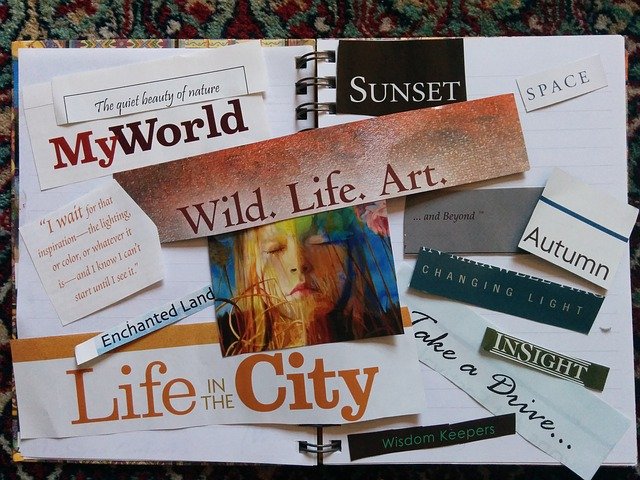
What is a vision board? Why might you want a create one, and how do you do it? Here are some vision boarding ideas, examples, supplies, suggestions, and tips for making use of vision boarding.
*This page may include affiliate links; that means I earn from qualifying purchases of products.
What Is a Vision Board?
How to Make a Vision Board
Supplies for a Vision Board
Are You a Therapist, Coach, or Wellness Entrepreneur?
Grab Our Free eBook to Learn How to
Grow Your Wellness Business Exponentially!
✓ Save hundreds of hours of time ✓ Earn more $ faster
✓ Boost your credibility ✓ Deliver high-impact content
More Vision Board Ideas
Here are some other vision boarding ideas that you may want to try:
- Vision Journals. Instead of making a vision board, you could create a vision journal. In this journal, you could record your thoughts, values, ideas, goals, and dreams.
- Vision Collections. I find collecting things to be an easy way to keep goals in mind. You could create a space on a dresser or countertop to keep the things that remind you of your goals. Maybe you collect a book that you want to inspire you to write your own book, an outfit that will inspire you to lose weight, or the first dollar you earned in a business you hope to grow.
- Vision Quilt. I once made a quilt with ironed on photos that represented my values—things like friendship, adventure, and happiness. That way I could see these happy photos and be reminded of my values all the time.
5 of the Best Vision Journals & Vision Boarding Kits

Check prices on Amazon.
Check prices on Amazon.

Video: How to Create a Vision Board
Vision Board Words
Vision Board Examples
Here are a few examples of vision boards to give you some inspiration.
Vision Board Templates
Sometimes it can be hard to know exactly where to start or what to put on your vision board. Luckily vision board templates can help. They provide a little outline and guide you as to what to focus on to gain awareness about your goals and dreams. Here is a template that may be helpful when creating your vision board.
What Else to Put on Your Vision Board
What Are Your Values?
I believe that personal values are the most important part of a vision board because no matter what our goals are, achieving them won’t feel good unless they are in alignment with our values. For example, maybe we have a goal of being financially successful and a value of kindness. That means that if we are jerks in the way we go about getting rich, it won’t be fulfilling. Or if we value love and we put all of our time into reaching our financial goals, we may end up less happy than when we started. This is why clarifying values can be so helpful for vision boarding.
“Why” Do You Want the Things You Want?
This question was tough for me. On my vision board, I have a certain annual income goal for myself. But why did I choose that number? Well, the real reason I want financial success is because I hate feeling financially insecure. I grew up poor and I still have a lot of fears about not being able to support myself. Knowing my “why” helps me think about what I’m really after. My real goal is to “not feel financially insecure”. So even though I have not made my income goal yet, I have made great strides at securing my financial future, for example, by investing in my retirement and saving money to buy an income property.
What Are Your Priorities?
Let’s face it. We can’t do everything we want to do in the very limited amount of time we have. That’s why it’s important to know what matters most to you. We have to balance our careers with our family life or our relationships. And at times, we’ll have to choose. After graduating with my Ph.D., I realized I had spent the last 6 years prioritizing the wrong things. My family meant so much more to me than my work yet I had been spending 99% of my time on work. Getting clear on your priorities can help you more quickly achieve what matters most to you.

The Science Behind Vision Boarding
Personally, I don’t rule out potentially useful tools like vision boards just because other scientists discount them. Science is slow (and affected by biases and funding issues), so instead of ignoring vision boarding, I think it’s useful to look at whatever science does exist to see what we can learn about the potential benefits of vision boarding.
For example, we do know that imagination is a powerful tool that can increase positive emotions (Quoidbach, Wood, & Hansenne, 2009). And positive emotions often create opportunities and increase the chance of success (Lyubomirsky, King, & Diener, 2005). This suggests that mental visualizations of positive outcomes and goals are likely good for our well-being and can help us more effectively achieve our goals.
If making a vision board also helps up be more optimistic about our future or to cultivate a growth mindset, all the better. Career optimism has been linked to our perceived career success (Spurk, Kauffeld, Barthauer, & Heinemann, 2015). And growth mindset—or the belief that we can grow and improve—can contribute to more positive outcomes (Dweck, 2015). Together, this research suggests that vision boarding, and other manifestation approaches, may have some value. It’s just important to keep in mind that vision boarding is not magic. Changing your thoughts, emotions, beliefs, and actions are still an important part of making your dreams come true.
Digital and Online Vision Boards
Here are some tools to try for online vision boards:
- Canva – Canva is a website that has pictures and cool fonts and templates that can help you create a nice digital vision board.
- Pinterest – I make Pinterest boards that are kind of like vision collections. They include random things that are meaningful to me and show me what I’m striving for.
- Dream It Alive – This is an online tool specifically designed for dream boarding.
Video: How to Make a Digital Vision Board
Vision Bullet Journals
Video: How to do vision boarding in a bullet journal
Goal Setting With a Vision Board
But I also sometimes make vision boards for specific goals. Most recently, I was working on buying my home. In the vision board, I included pictures of the things I wanted so that when I finally saved up enough money and went house hunting, I would know what I was looking for when I found it.
Here are some goals and life domains you may want to focus on:
- Health
- Career
- Family
- Wealth
- Love
- Knowledge
- Hobbies
- Travel/Big experiences
- Community/Giving back
Vision Board Pictures
Vision Board Checklist
- My vision board helps clarify my goals and the steps I need to take to get there.
- The words or images I chose for my vision board represent more than just the things I want, but also my values, priorities, and reasons for wanting them.
- I will be careful to treat myself with self-compassion and view my experiences non-judgmentally as I pursue my goals.
- I reflect on my goals (and vision board) periodically to see if I’ve learned anything that can help me more effectively or enjoyably reach my goals.
- I recognize and appreciate myself for the goals I have achieved.
Articles Related to Vision Boarding
Books & Products Related to Vision Boarding
Final Thoughts on Vision Boarding
Don’t Forget to Grab Our Free eBook to Learn How to
Grow Your Wellness Business Exponentially!
References
- Burton, L., & Lent, J. (2016). The use of vision boards as a therapeutic intervention. Journal of Creativity in Mental Health, 11(1), 52-65.
- Dweck, C. (2015). Carol Dweck revisits the growth mindset. Education Week, 35(5), 20-24.
- Lyubomirsky, S., King, L., & Diener, E. (2005). The benefits of frequent positive affect: Does happiness lead to success?. Psychological bulletin, 131(6), 803.
- Quoidbach, J., Wood, A. M., & Hansenne, M. (2009). Back to the future: The effect of daily practice of mental time travel into the future on happiness and anxiety. The Journal of Positive Psychology, 4(5), 349-355.
- Spurk, D., Kauffeld, S., Barthauer, L., & Heinemann, N. S. (2015). Fostering networking behavior, career planning and optimism, and subjective career success: An intervention study. Journal of vocational behavior, 87, 134-144.
Are You a Therapist, Coach, or Wellness Entrepreneur?
Grab Our Free eBook to Learn How to Grow Your Wellness Business Fast!
