
List of Vegetables: Nightshades, Starches, & More
Vegetables are the edible portions of plants, and they are packed with nutrients. This article describes the different types of vegetables and how each of them can benefit you.
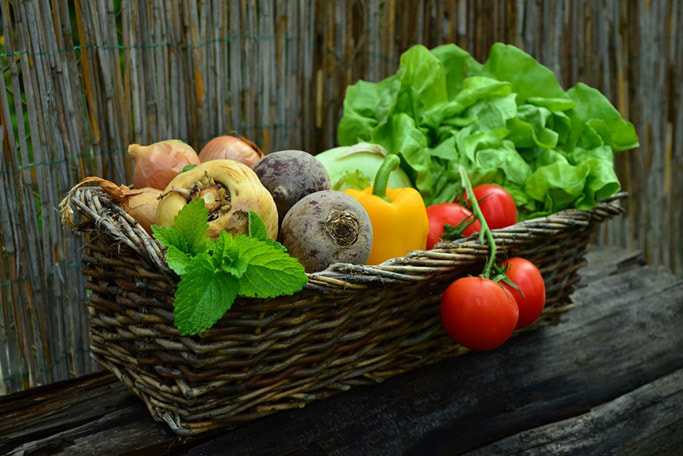
*This page may include affiliate links; that means we earn from qualifying purchases of products. |
I think for most of us, what we ate growing up is what we assume is out there, or what most people eat. It was only when I got to college that I realized how many vegetables my parents had never introduced me to. I have a very distinct memory of a friend in college emerging from his garden with a huge handful of kale. Finally, I was meeting this mystical, apparently very nutritious green in the flesh! |
I’ve become more of a vegetable connoisseur since then, and I am excited to share all the science behind the power of vegetables with you in this article. Everything your mother or grandmother told you about vegetables is true! Well, okay, not everything, but I’m not exaggerating all that much. Let’s learn about the different types of vegetables and all they have to offer for your well-being.
Are You a Therapist, Coach, or Wellness Entrepreneur?
Grab Our Free eBook to Learn How to
Grow Your Wellness Business Exponentially!
✓ Save hundreds of hours of time ✓ Earn more $ faster
✓ Boost your credibility ✓ Deliver high-impact content
What Are Vegetables? (A Definition)
Vegetables can be annual or perennial crops (Ulger et al., 2018). Annual crops need to be planted anew each growing season because they will typically die off after being planted once. Some vegetables that are annual crops include carrots, cauliflower, and beets. Meanwhile, perennials regrow naturally each spring – they don’t need to be planted again each year. Some examples of perennial vegetables are asparagus, mint, kale, and sweet potato.
Vegetables are packed with all sorts of nutrients, including vitamins and minerals, that maintain or can even improve our health (Robinson, 1987). However, the amount and quality of those nutrients depend on many factors, including where and how it was grown, how long one waits after harvesting the vegetable to eat it, and how one prepares and cooks the vegetable (Masih et al., 2002).
Minimally Processed Vegetables
For example, many grocery stores sell what the food industry refers to as “minimally processed vegetables” – vegetables that have been prepared or processed, but not cooked, to make them easier to work with (Masih et al., 2002). The example that immediately comes to mind for me here is how tempted I always am to buy the pre-chopped butternut squash, because who wants to spend those extra ten minutes slicing and dicing? Unfortunately, almost all processing of food in this manner begins to compromise its nutritional quality (O’Connor et al., 1992), so it is best to buy whole, intact vegetables whenever possible, and to cook or eat them as soon as possible after one begins processing them in any way.
Vegetable Categories
We can divide vegetables into five categories: leaf vegetables, stalk vegetables, fruit and flower vegetables, root, bulb, or tuber vegetables, and legumes (Lintas, 1992).
Leaf vegetables are what you might be called salad greens or leafy greens. Types commonly eaten by Westerners include lettuce, chard, spinach, and arugula. They are packed with minerals and vitamins – the more so the greener they look.
Stalk vegetables are the vegetables whose stalks we eat. In the Western diet, the main stalks eaten are celery and asparagus. Like leafy greens, stalk vegetables are more nutritious the greener they appear.
Fruit and flower vegetables are another commonly consumed category; vegetables such as broccoli, cauliflower, tomatoes, and peppers fall into this category. Vegetables that hang off the stalk, waiting to be plucked and munched on, are likely fruit or flower vegetables. The darker the pigmentation of these vegetables, the riper, tastier, and more nutritious they will be. (Maybe you have learned this lesson, as I have, from trying to eat tomatoes off the vine that are still a bit too green and not enough red.)
Next, we have root, bulb, and tuber vegetables, all of whom we pull from underground to eat. Potatoes, carrots, beets, onions – all of them grow underground and are (I must say) very satisfying to yank from the garden bed with your own hands. (Maybe wash them before eating, though.)
The final category of vegetables is what are called legumes. Kind of like the other legumes you might be thinking of, such as nuts and beans, these are the parts of vegetables that grow inside a shell and are usually removed from that casing before consumption. Peas are probably the classic vegetable legume.
Benefits of Vegetables
The magic of vegetables is not simply that they are nutrient-dense. Vegetables also are generally low in calories – they provide a ton of nutrition relative to how much energy they deliver (Lintas, 1992). This may be because most vegetables also have a high water content, relative to other categories of foods. People who eat high amounts of other foods, which tend to be more calorie-dense and less nutrient-dense, are getting much less of the vital nutrients they need before they feel full and don’t want to eat anymore. Switching to eating more vegetables allows people to eat more food that packs more nutrition and fewer calories – a likely recipe for less strain on the body, greater functioning, and even weight loss.

List of Nightshade Vegetables
One family of vegetables, which branches across multiple vegetable categories, is called the Nightshade family. The nightshades you are most likely to encounter on a regular basis include tomatoes, peppers, white potatoes, and eggplants. Nightshade vegetables contain many power nutrients, including phytochemicals, or compounds produced by plants (Kaunda & Zhang, 2019). These phytochemicals have many health-enhancing qualities, and unless you are one of the relatively few people for whom nightshades can cause gastrointestinal irritation, it is generally a good idea to include plenty of nightshades in your diet.
List of Nonstarchy Vegetables
Some vegetables are starchier than others, and those with a higher starch content have more glucose in them, making them more likely to raise your blood sugar (Drewnowski et al., 2022). Can you guess which are the starchiest vegetables? Here’s a hint: they are probably the ones you crave when you are hungry, and the ones that people sometimes dismiss as not being much of a vegetable: corn and potatoes. This is why you can find high fructose corn syrup in so many processed foods: processing corn to extract its sweet starchiness yields a powerful sweetener to add to foods.
As you might guess, eating non-starchy vegetables is typically healthier and will mess with your blood sugar and energy levels less (Drewnowski et al., 2022). Some non-starchy vegetables include asparagus, Brussels sprouts, cabbage, celery, cucumbers, okra, peppers, and zucchini.
List of Vegetables Low in Carbs
Vegetables such as beets, carrots, potatoes, and other root vegetables are higher in carbohydrates than other vegetables, although these carbohydrates are typically complex rather than simple sugars, meaning they are still far from as bad for your health as something like white bread (Lintas, 1992). Vegetables low in carbs include most of the other categories of vegetables (i.e., leaf, stem, and fruit or flower vegetables). So if you are looking for low-carb vegetables, salad greens, and vegetables especially high in water content, such as celery, cucumber, and zucchini, should meet your needs.
List of Vegetables High in Fiber

List of Vegetables With Vitamin D
Vegetables are not generally a good source of vitamin D (Lintas, 1992). Fish, mushrooms, and chicken eggs can provide vitamin D, as can foods that have been fortified with vitamin D, such as cow’s milk or orange juice.
List of Vegetables With Vitamin C
Vegetables across several categories are excellent sources of vitamin C (Lintas, 1992). For example, leafy greens such as lettuce and cabbage provide plenty of vitamin C. (Here’s a tip: the greener and younger the leaves, the more vitamin C they contain.) Broccoli, and to a slightly lesser extent cauliflower, are also good sources of vitamin C, as are tomatoes and bell peppers.
List of Vegetables High in Iron
Research on changes in the American diet indicates that we have been getting less of our iron from vegetables and more from grains and meats (Vincente et al., 2014). It does not have to be this way, though – you can get all the iron you need by eating enough vegetables, especially leafy greens and legumes. Popeye the Sailor was right: eating lots of spinach, but also kale, collards, or green beans, can cover your iron needs.
List of Leafy Vegetables
Green leafy vegetables are some of the most bang-for-your-buck nutritious foods out there, contributing all sorts of vitamins, minerals, and anti-inflammatory nutrients to our diets (Natesh et al., 2017). Some of our most commonly consumed leafy greens include lettuce, spinach, kale, collard greens, arugula, chard, and bok choy. However, there are many other vegetables whose leaves can also be consumed safely and with nutritious benefits, such as dandelion or beet greens.
List of Vegetables High in Protein
When you hear the word protein, you might think of a meat or dairy product, or perhaps those big containers of protein powder in the supplements aisle. However, green vegetables offer you plenty of protein, and by delivering that protein alongside other beneficial vitamins and minerals, they make it even easier to absorb and process (Aletor et al., 2002). Increasing the ratio of protein you get from vegetables versus meats has many potential health benefits (Song et al., 2016). Some of the most protein-heavy vegetables include spinach, cauliflower, collard greens, broccoli, Brussel sprouts, and watercress.
List of Low Oxalate Vegetables
Some people may be adversely affected by consuming vegetables with oxalic acid, a naturally occurring chemical in plant tissues (Noonan & Savage, 1999). Most of the oxalic acid in such vegetables can be cooked off or removed simply by soaking the vegetables. To minimize oxalate intake, one could focus more on eating the stems or stalks of plants, rather than the leaves (Noonan & Savage, 1999). (You would be missing out on all the amazing nutrients in the plant leaves, though.)

Articles Related to Lists of Vegetables
Books Related to Lists of Vegetables
Final Thoughts on Lists of Vegetables
In writing this article, I was reminded of two fundamental truths: (1) nearly all vegetables are good to consume and (2) some vegetables are really, really good for you. Eating as many green leafy vegetables as possible, for example, seems like it could only help your overall health. Vegetables are densely packed with nutrients, high in water content, and low in calories. They are the most energy-efficient way to acquire the essential nutrients you need to function at your best. And if you can prepare or cook them in ways that taste great, you can safely and beneficially eat way more of them than you would be able to eat other food groups.
So on that note, here’s a video you can watch to make sure you are getting the maximal nutritional value from the vegetables you do eat. I think it can be really helpful and encouraging information to have. Personally, I get a real sense of satisfaction out of the occasions when I really prioritize making the most nutritious, health-enhancing meal possible.
Video: 4 Hacks to Get the Most Nutrition From Your Veggies
Don’t Forget to Grab Our Free eBook to Learn How to
Grow Your Wellness Business Exponentially!
References
- Aletor, O., Oshodi, A. A., & Ipinmoroti, K. (2002). Chemical composition of common leafy vegetables and functional properties of their leaf protein concentrates. Food Chemistry, 78(1), 63-68.
- Kaunda, J. S., & Zhang, Y. J. (2019). The genus solanum: an ethnopharmacological, phytochemical and biological properties review. Natural Products and Bioprospecting, 9, 77-137.
- Lintas, C. (1992). Nutritional aspects of fruits and vegetables consumption. Options Mediterraennes, 19, 79-87.
- Masih, L., Roginski, H., Premier, R., Tomkins, B., & Ajlouni, S. (2002). Soluble protein content in minimally processed vegetables during storage. Food Research International, 35(7), 697-702.
- Noonan, S., & Savage, G. (1999). Oxalate content of food and its effect on humans. Asia Pacific Journal of Clinical Nutrition, 8, 64–74.
- O’Connor, R. E., Skarshewski, P., & Thrower, S. J. (1992). Modified atmosphere packaging of fruits, vegetables, seafood and meat: state of the art. ASEAN Food Journal (Malaysia), 7, 127-136.
- Robinson, D. S. (1987). Food-biochemistry and nutritional value. Longman Scientific & Technical.
- Song, M., Fung, T. T., Hu, F. B., Willett, W. C., Longo, V. D., Chan, A. T., & Giovannucci, E. L. (2016). Association of animal and plant protein intake with all-cause and cause-specific mortality. JAMA Internal Medicine, 176(10), 1453-1463.
- Ülger, T. G., Songur, A. N., Çırak, O., & Çakıroğlu, F. P. (2018). Role of vegetables in human nutrition and disease prevention. In Asaduzzaman M, Asao T (Eds.), Vegetables: importance of quality vegetables to human health. (pp. 7-32). InTech: London, UK.
- Vincente, A. R., Manganaris, G. A., Ortiz, C. M., Sozzi, G. O., & Crisosto, C. H. (2014). Nutritional quality of fruits and vegetables. In Postharvest handling (pp. 69-122). Academic Press.
Are You a Therapist, Coach, or Wellness Entrepreneur?
Grab Our Free eBook to Learn How to Grow Your Wellness Business Fast!
