
Self-Help: Definition, Topics, & Tips
Do you want to change your life? In this article, we’ll define what self-help is and how to use it to better your life.
*This page may include affiliate links; that means we earn from qualifying purchases of products. |
It is normal to experience hardships in life, and we sometimes let these hardships get us down. Luckily, there are many aspects of our lives that are within our control. We truly can help ourselves. In this article, we’ll go over what self-help is and how to implement it in your life. |
Are You a Therapist, Coach, or Wellness Entrepreneur?
Grab Our Free eBook to Learn How to
Grow Your Wellness Business Exponentially!
✓ Save hundreds of hours of time ✓ Earn more $ faster
✓ Boost your credibility ✓ Deliver high-impact content
What Is Self-Help? (A Definition)
Self-help is best suited to those who wish to make small changes to improve their lives—for example, small changes like improving relationships, learning to regulate emotions, or gaining clarity on goals. More severe or challenging mental health issues usually require the support of a mental health counselor or therapist.
Where to find self-help
You can find self-help resources on the internet through reputable websites like berkeleywellbeing.com, at the library, or through community self-help programs (e.g., support groups like AA or group therapy).

The Self-Help Movement
In the mid-’70s, self-help books started to emerge—books like Support Systems and Mutual Help: Multidisciplinary Explorations by Gerald Caplan and Marie Killilea. These books increased awareness of self-help. This awareness then began increasing not just in the USA but also in Western Europe and Japan.
In the 1990s, online self-help began to emerge. Self-help groups and informational websites proliferated in the years that followed.
The Self-Help Industry
The self-help industry is a multi-billion-dollar industry. It not only includes books, but also conferences, resources, and other tools that might aid the self-help process (Williams, 2014). Given the industry has fuzzy definitions, rules, and regulations, many products enter the self-help industry with little to no evidence behind them. For these reasons, it’s important to be careful when consuming self-help books and products.
Examples of Self-Help
- Hygiene
- Nutrition
- Exercise level
- Living conditions and social habits
- Emotional well-being
- Social and relationship well-being
- Career, success, and personal goals
Some good examples of practicing good self-help include:
- Exercising regularly
- Eating a healthy diet
- Maintaining and fostering healthy relationships
- Making sure to get good-quality sleep
- Following treatment plans and taking your medication as your doctor prescribed
- Developing good communication skills
- Practicing healthy emotion regulation
- Seeking professional mental-health support if you need it
Self-Help for Depression
Although it is best to seek professional help when managing depression, there are other things that you can do in conjunction with your treatment plan to help you feel better.
Some of these include:
- Making a self-help list. No one knows yourself as well as you do, so you may find it helpful to make a list of things that boost your mood to use when you feel down. Some items on the list may include:
- Playing a playlist of your favorite songs
- Using an adult coloring book or sketch pad
- Calling or texting a loved one
- Knitting or doing any hobby with your hands
- Practicing yoga or another light exercise
- Going for a walk around the block
- Daily Journaling. Writing out your feelings and thoughts can help you better understand what situations trigger your depression.
- Maintaining a routine. Finding a routine can be comforting and help you maintain a balanced life.
- Eating Clean. Often our diet can influence our mental health along with our physical health. Making sure you have a healthy diet can help you have more energy and better sleep.
- Talking it out. Talking with someone you trust may help lighten your mood. Even if you don’t wish to talk about your mental health struggles, sometimes a conversation can help cheer you up or distract you.
- Finding a safe space. Making a spot in your home that relaxes you when you need a break may provide relief and relaxation. You can fill your peaceful zone with things that bring you positivity, including candles, soft pillows, or anything else you like.
- Getting some sunshine. Sunshine provides you with vitamin D, which has been shown to boost levels of serotonin (Sabir et al., 2018). Serotonin is a neurotransmitter in your brain that regulates mood. If your serotonin levels are low, this can exacerbate symptoms of depression.
Self-Help for Anxiety
Here are some self-help exercises for anxiety to consider:
- Familiarize yourself with your anxiety. This may involve reading or watching helpful videos, writing in a journal, or taking an online quiz to help better understand your anxiety.
- Swap spaces. It may help you with your anxiety if you change your physical setting. If an email triggers your anxiety, it may help you to step away from the computer and go outside for a while.
- Ground yourself with your senses. When we get anxious, it can often overwhelm our senses. Grounding can really help. For example, you might try focusing on the taste, scent, and sensations as you sip a hot cup of tea.
- Talk about it. More than 4 in 10 adults in the US have anxiety (Twenge & Joiner, 2020). Talking with a therapist is always a solid option, but online support groups for anxiety or a trusted friend or family member may also help.
- Practice breathing. Deep breathing is a simple but effective method to deal with anxiety (Khng, 2017) and aids in the calming down process.
- Exercising. As with many things, exercise is typically a net positive on your health. Whether you engage in dancing or yoga, moving your body is an excellent way to soothe anxiety.
Self-Help Journaling
- Reduced stress
- Increased self-awareness
- Improved mental clarity
- Improved focus
- More peace of mind
- Decreased anxiety
- Improved memory
- Strengthened emotional maturity
- Building emotional vocabulary
- Releasing built-up emotions
Journaling can help you feel healthy and safe and even improve your mindfulness skills (Smyth et al., 2018). Journaling can provide an outlet for emotions and help you work through them healthily and privately.
Writing out your feelings can help you express yourself and aid self-discovery. This can also be a tool to help improve your life by identifying and understanding your triggers, patterns, and past traumas.
Self-Help Journal Prompts
For your relationships:
- Who do you trust and why?
- How do you draw strength from loved ones?
- What are the top three most important things you’ve learned from previous relationships?
- What does love mean to you?
- What are the top five personality traits you value in potential partners, and why?
For your career:
- Does your work fulfill you? Why or why not?
- What part of your workday do you enjoy the most?
- What are your overall life goals?
- What can you do to improve your work performance?
- Does your work drain you? If so, is this something you can change?
For self-reflection:
- What are your top three core values?
- Finish the sentence “My life would be incomplete without…”
- Describe the significant events in your life that shaped you into the person you are today.
- When do you trust yourself the most?
- What aspects of your personality do you like, and which ones do you dislike? Why?
For uneasy or uncomfortable emotions:
- What difficult thoughts come up most frequently for you?
- Describe a choice you regret and what you learned from it.
- What parts of daily life bring you stress and frustration? What can you do to change those experiences?
- Which emotions do you find the hardest to accept, and how do you handle these emotions?
- What are three self-defeating thoughts that show up in your self-talk? How can you reframe them to encourage yourself instead?
Self-Help Therapy
- Journaling. I’ve written much about journaling in this article because the research shows it works (Keech & Coberly-Holt, 2021). Writing about your thoughts, emotions, and experiences can help you identify your thinking and behavioral patterns. This increase in awareness can be an essential step to improving your mental health.
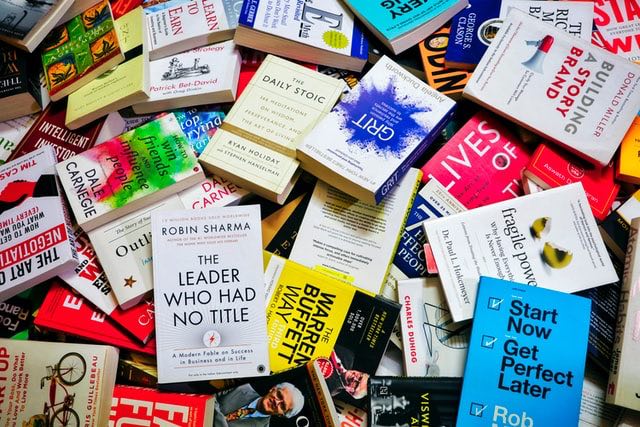
- Self-help books. Various books online or at your local bookstore in the self-help section may help you.
- Apps. Many self-help apps exist with resources such as self-assessments, worksheets, or courses to help you manage your mental health. This can include habit trackers, meditation programs, or relaxation games. Here are some examples of apps on Android and IOS:
- Coach.me. This app is a habit tracker.
- Remente. This app helps you set goals.
- Success Psychology. This app can help you learn how to strategize financially and has good tips to stay positive.
- Coach.me. This app is a habit tracker.
Self-Help Tips
- Determine your starting point. Before you can make a plan, it might help to know where you’re starting from. Once you know this, you can begin to add beneficial self-help strategies to your schedule.
- Identify the stressors. You may find it helpful to list all the things that cause stress in your life. With this list, you can then plan to begin cutting out some stressors.
- Identify and strengthen your coping skills. Everyone copes with stress in their own way. Make a list of ways you deal with stress and then see if you can determine which are healthy and which are not. It may be helpful to swap out unhealthy strategies for more beneficial coping mechanisms.
With these tips, you can begin formulating a plan to help you cope and learn to help yourself.

List of Self-Help Topics
- Getting a Fresh Start
- Setting Your Own Rules For Life
- Reducing Everyday Stress
- Thinking Critically
- Taking Action
- Keeping Your Mind Sharp
- Communicating More Assertively
- Being More Creative
- Communicating More Clearly
- Setting Goals
- Practicing Thankfulness
- Breaking Bad Habits
- Working Smarter
- Being a Better Leader
- Improving Memory
- Being More Optimistic
- Finding Your Passion
- Being More Persistent
- Being More Productive
- Being More Mindful
- Finding Inner Peace
- Practicing Positive Self Talk
- Dealing With Change
- Dealing With Anxiety
- Enjoying Life
Self Help Skills
- Stretching and moving your body
- Changing your environment
- Taking a warm bath or shower
- Looking at soothing imagery
- Listening to soft music
- Smelling soothing scents
- Engaging in self-compassion
Before diving into self-help, you may want to take a look at the video below which talks about some of the issues with self-help:
Video: Why Self Help Will Not Change Your Life
Self-Help Quotes
- “Learn to deal with the fact that you are not a perfect person, but you are a person that deserves respect and honesty.” ― Pandora Poikilos, Excuse Me, My Brains Have Stepped Out
- “Remember always that you not only have the right to be an individual, you have an obligation to be one.” — Eleanor Roosevelt
- “Every one of us needs to show how much we care for each other and, in the process, care for ourselves.” — Princess Diana
- “Grab a coffee. Journal your intentions. Get to work. Create miracles.” — Elyse Santilli
- “You have considerable power to construct self-helping thoughts, feelings, and actions as well as to construct self-defeating behaviors. You have the ability if you use it, to choose healthy instead of unhealthy thinking, feeling and acting.” — Albert Ellis
Articles Related to Self-Help
Books Related to Self-Help
Final Thoughts on Self-Help
Don’t Forget to Grab Our Free eBook to Learn How to
Grow Your Wellness Business Exponentially!
References
- Gluck, S. (2021, December 15). What is Self-Help for Mental Health? HealthyPlace. Retrieved on 2022, September 16.
- IsHak, W. W., Wen, R. Y., Naghdechi, L., Vanle, B., Dang, J., Knosp, M., … & Louy, C. (2018). Pain and depression: a systematic review. Harvard review of psychiatry, 26(6), 352-363.
- Keech, K. N., & Coberly-Holt, P. G. (2021). Journaling for Mental Health. In Strategies and Tactics for Multidisciplinary Writing (pp. 39-44). IGI Global.
- Khng, K. H. (2017). A better state-of-mind: deep breathing reduces state anxiety and enhances test performance through regulating test cognitions in children. Cognition and Emotion, 31(7), 1502-1510.
- Sabir, M. S., Haussler, M. R., Mallick, S., Kaneko, I., Lucas, D. A., Haussler, C. A., Whitfield, G. K., & Jurutka, P. W. (2018). Optimal vitamin D spurs serotonin: 1,25-dihydroxyvitamin D represses serotonin reuptake transport (SERT) and degradation (MAO-A) gene expression in cultured rat serotonergic neuronal cell lines. Genes & nutrition, 13, 19.
- Smyth, J. M., Johnson, J. A., Auer, B. J., Lehman, E., Talamo, G., & Sciamanna, C. N. (2018). Online positive affect journaling in the improvement of mental distress and well-being in general medical patients with elevated anxiety symptoms: A preliminary randomized controlled trial. JMIR mental health, 5(4), e11290.
- Twenge, J. M., & Joiner, T. E. (2020). US Census Bureau‐assessed prevalence of anxiety and depressive symptoms in 2019 and during the 2020 COVID‐19 pandemic. Depression and anxiety, 37(10), 954-956.
- Vattano, A. J. (1972). Power to the people: self-help groups. Social Work 17, 7-15.
- Williams, B. (2014). Knowledge, imagination and the self-help industry.
Are You a Therapist, Coach, or Wellness Entrepreneur?
Grab Our Free eBook to Learn How to Grow Your Wellness Business Fast!
